









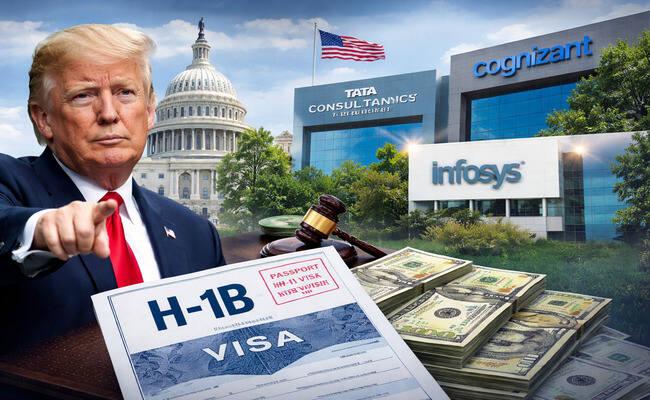
US President Donald Trump’s renewed crackdown on immigration is expected to deal a significant blow to Indian IT majors such as Tata Consultancy Services (TCS), Infosys, and Cognizant, according to an analysis by Bloomberg News. At the centre of the concern is a proposed $100,000 fee on new H-1B visa hires processed through US consulates abroad — a move described as the toughest restriction yet on skilled foreign workers.
The H-1B visa programme, which allows foreign professionals with at least a bachelor’s degree to work in the US, has long been a critical talent pipeline for global IT services firms. Bloomberg’s analysis shows that between May 2020 and May 2024, nearly 90% of new H-1B approvals for TCS, Infosys, and Cognizant were processed outside the US. If the proposed levy had been in force during this period, the additional costs for these companies would have run into hundreds of millions of dollars.
Infosys would have been the most affected, with over 10,400 workers — more than 93% of its new H-1B approvals — subject to the fee. This could have translated into visa costs exceeding $1 billion. TCS would have paid the levy for around 6,500 employees, accounting for 82% of its new approvals, while Cognizant would have faced charges for more than 5,600 workers, or 89% of its H-1B hires.
Despite legal challenges mounted by the US Chamber of Commerce and multiple US states, analysts believe the proposal could sharply reduce H-1B applications and accelerate offshore hiring. Immigration attorney Jonathan Wasden warned that the fee could shut out exceptional global talent from US opportunities.
Some companies have sought to downplay the immediate impact. Cognizant has said it has already reduced its dependence on visas, while Infosys CEO Salil Parekh earlier stated that the firm requires limited new sponsorships and does not expect disruption to client services.
Experts, however, believe the long-term impact could be substantial. Legal-tech firm Lawfully estimates that the fee, along with proposed changes to the H-1B lottery system, could reduce next year’s H-1B registrations by 30% to 50%, forcing companies to rethink recruitment strategies and expand offshore delivery, particularly in India.
While supporters argue the move will curb misuse of the H-1B programme and protect American wages, critics warn that it could fundamentally reshape access to global talent and weaken the US technology sector’s competitiveness.
Recent Random Post: