









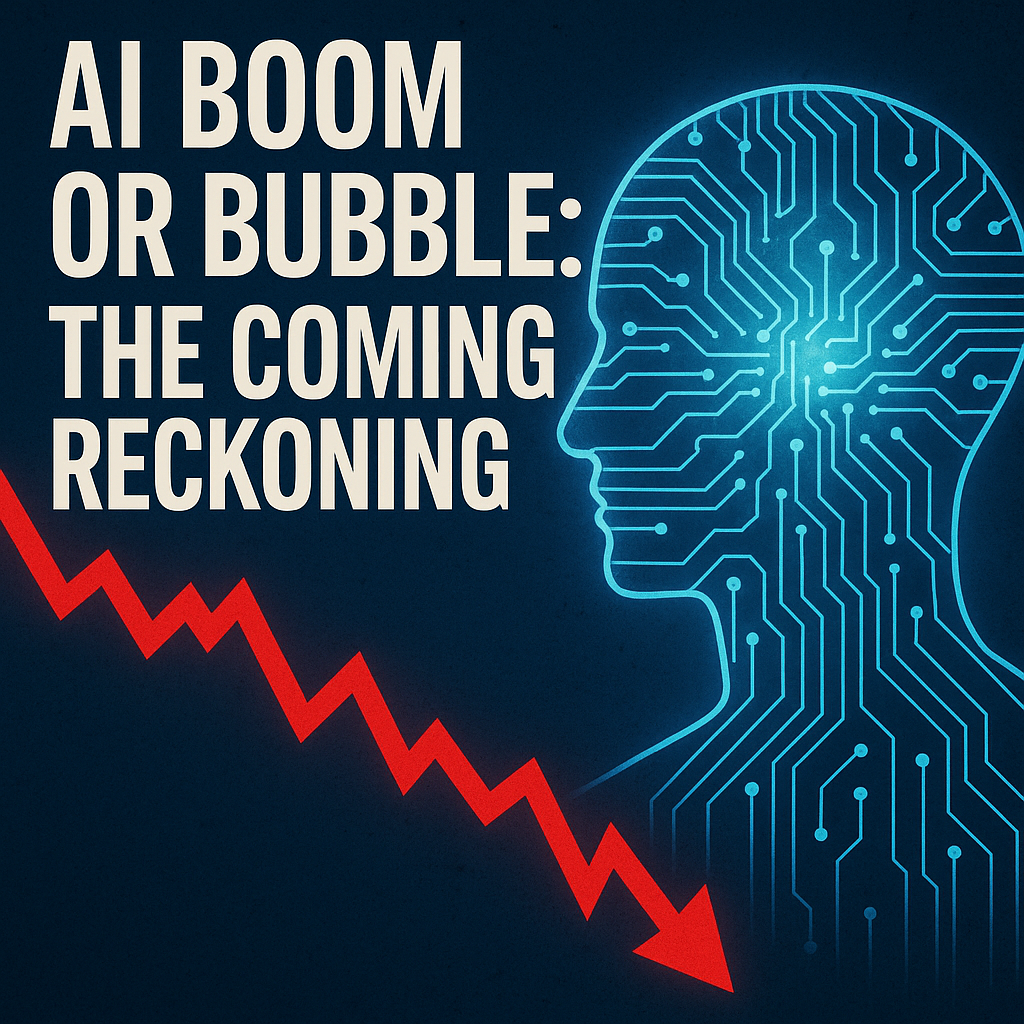
A recent MIT study has revealed a sobering reality behind the artificial intelligence frenzy: nearly 95% of generative AI projects are failing to achieve profitability, with only about 5% showing meaningful revenue growth.
Despite record-breaking investments, most firms are yet to demonstrate tangible productivity improvements from AI. This disconnect has sparked growing concern that the current wave of enthusiasm could lead to a collapse reminiscent of the dot-com bubble of the late 1990s.
In 2025, private AI investment in the United States reached an unprecedented $109.1 billion, fueling rapid expansion in sectors like semiconductors, data centers, and cloud infrastructure. A significant portion of the S&P 500’s growth has been attributed to AI optimism, particularly around companies such as NVIDIA, whose stock valuations have skyrocketed amid expectations of long-term AI dominance.
Yet, the IMF has warned that today’s market valuations closely resemble those seen prior to the dot-com crash—when overhyped tech firms promised disruption but failed to deliver sustainable profits. The key difference today lies in funding sources: major tech giants are using internal earnings to support AI growth, reducing dependency on speculative venture capital.
However, experts including Ray Dalio and Sam Altman caution that speculation has outpaced genuine innovation. Should the AI bubble burst, the consequences could ripple across the U.S. economy, which has increasingly tied its growth to AI-related investments and automation initiatives.
A steep decline in AI funding could result in slower innovation, corporate downsizing, and regional economic slowdowns, particularly in technology-driven hubs. The shock could also spill into global trade, weakening economies that rely heavily on technology exports.
Amid this uncertainty, India stands at a pivotal position in the global AI landscape. While countries like the U.S. dominate AI investment, India’s expanding digital ecosystem and skilled workforce position it as a potential long-term winner of the AI revolution. To harness these benefits, India must emphasize stable policy frameworks, ethical AI development, and responsible investment governance.
As Amara’s Law wisely states, people often overestimate technology’s short-term impact while underestimating its long-term potential. Even if an AI correction occurs, its transformative capabilities are unlikely to vanish. With strategic oversight, sustainable innovation, and measured investment, AI can evolve from a speculative boom into a foundation for enduring global progress.
Recent Random Post:
Tamil Nadu Elections | స్టాలిన్, విజయ్ నామినేషన్ దాఖలు | Stalin & Vijay File Nominations
Tamil Nadu Elections | స్టాలిన్, విజయ్ నామినేషన్ దాఖలు | Stalin & Vijay File Nominations