








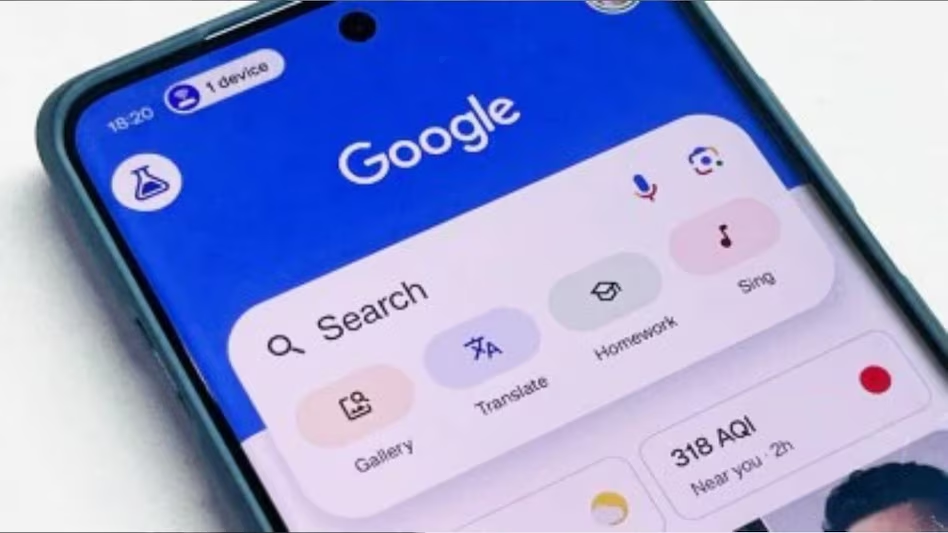
Google search traffic is projected to decline by nearly 40% over the next three years, according to a new report from the University of Oxford’s Reuters Institute, as AI-driven “zero-click” summaries increasingly replace traditional search results and reduce referrals to publisher websites.
The report identifies a major inflection point following the rollout of Google’s AI Overviews, which now occupy prominent positions in search results by offering instant, AI-generated answers instead of directing users to external sources. As a result, publishers are witnessing a steady erosion in website visits.
Data from the study shows that over 33% of new websites globally have lost Google search traffic, with the impact even more pronounced in the United States, where traffic has fallen by 38%. Content categories such as lifestyle and utility-based information—including weather updates, TV listings and horoscopes—have been hit the hardest.
“Publishers that specialise in lifestyle or utility content are more likely to have been affected,” said Nic Newman, senior research associate at the Reuters Institute.
Publishers Pivot to Video, Audio and Original Journalism
The sharp decline in search referrals is accelerating a broader transformation across the media industry. Publishers are increasingly shifting away from text-heavy articles and investing in video, audio, podcasts, YouTube, Instagram and short-form content to reach audiences directly on platform-driven ecosystems.
The report highlights a net 79-point increase in planned investment in video and audio formats, reflecting how publishers are adapting to changing consumption habits. At the same time, newsrooms are placing renewed emphasis on original reporting, explanatory journalism and human-led storytelling to distinguish their work from AI-generated summaries.
The rise of the creator economy is further reshaping the landscape. Nearly 70% of news executives surveyed said they are concerned about the growing influence of independent news creators and social-media influencers, who increasingly command audience attention outside traditional media channels.
AI Licensing and Answer Engine Optimisation
In response to these challenges, around 20% of publishers are exploring content licensing deals with AI platforms as a potential new revenue stream. However, nearly half of respondents remain sceptical, believing such agreements are unlikely to replace core income sources such as advertising and subscriptions.
Publishers are also embracing Answer Engine Optimisation (AEO)—a strategy focused on structuring content so it can be easily understood, surfaced and cited by AI-powered search tools. The goal is to improve visibility within AI-generated answers and increase the chances that credible journalism is referenced rather than replaced.
As AI continues to redefine how audiences discover information, the report suggests that the future of digital publishing will depend less on search dominance and more on direct audience relationships, distinctive reporting and platform-native storytelling.
Recent Random Post: