








When you think of Bengaluru, images of pleasant weather, towering tech parks and crispy dosas come to mind — along with roads perpetually choked with traffic. While tourists may find the chaos mildly irritating, for one Bengaluru-based software engineer, it turned into both a nightmare commute and an unexpected innovation opportunity.
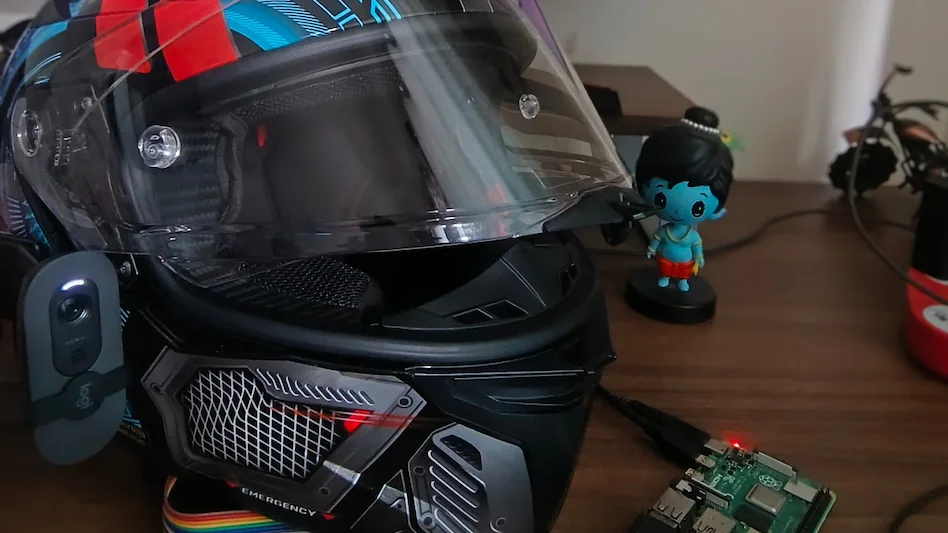
Frustrated by rampant traffic indiscipline, software engineer Pankaj Tanwar has modified a standard motorcycle helmet into an AI-powered surveillance device capable of detecting traffic violations in near real time.
Tanwar recently showcased the project on social media platform X (formerly Twitter), where it quickly went viral, triggering debate around civic responsibility, privacy, and what many are calling “snitch-tech” surveillance.
Real-Time Violation Reporting
The helmet is equipped with an artificial intelligence system trained to identify common road offences. According to Tanwar, the device can detect riders without helmets, lane violations, and other forms of traffic indiscipline. Once a violation is identified, the system automatically captures a high-resolution image of the vehicle’s number plate.
What has sparked the most discussion online is the next step. The helmet is programmed to automatically transmit the photographic evidence, along with GPS coordinates and vehicle registration details, directly to local traffic police.
Sharing the demonstration, Tanwar issued a blunt warning to fellow commuters:
“Bengaluru people, so now ride safe or regret it.”
‘Peak Bengaluru’ Innovation
Supporters have hailed the project as “Peak Bengaluru,” praising it as a creative use of low-cost AI to address everyday civic issues. Some have suggested that similar technology could be integrated into dashcams, commercial vehicles, or even linked to reward systems for citizens who report genuine traffic violations.
However, critics have raised concerns around privacy, misuse, and the rise of digital vigilantism. Questions have also been raised about the legal admissibility of evidence collected using a private, unverified device.
A Hobbyist’s Experiment
Responding to the backlash, Tanwar clarified that the helmet is currently a prototype, created as part of his hobby of experimenting with “weird and fun” technology rather than as a formal law-enforcement tool.
Even so, the project underscores a growing trend — citizens increasingly turning to AI and personal tech solutions to demand better infrastructure, accountability, and enforcement.
As Bengaluru continues to battle its traffic woes, Tanwar’s AI helmet serves as a reminder that in India’s Silicon Valley, the next traffic monitor might just be the commuter riding beside you.
Recent Random Post: