









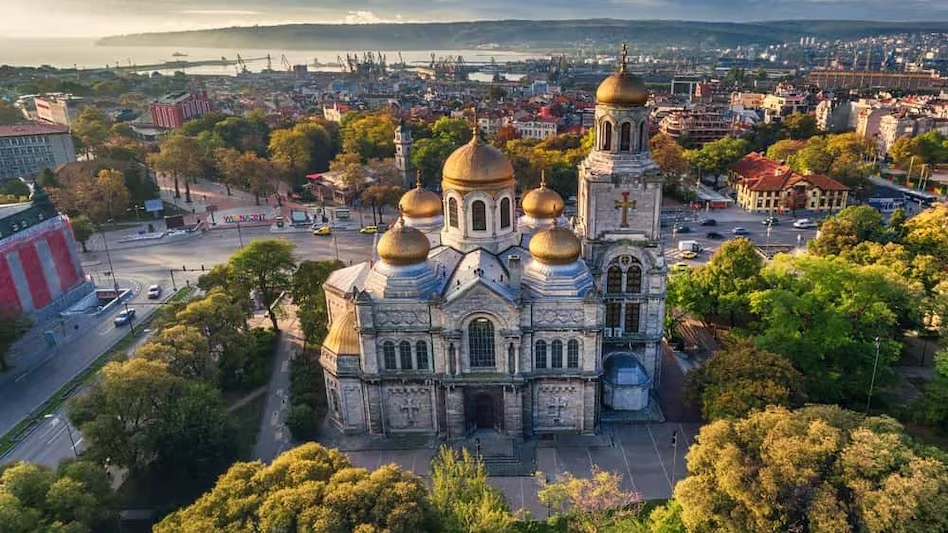
Bulgaria is steadily positioning itself as a new hotspot for remote professionals with the introduction of its digital nomad visa, aimed at attracting global talent looking beyond overcrowded destinations such as Portugal and Spain. As highlighted by Euronews, the visa allows non-EU remote workers to legally live and work from Bulgaria while enjoying the advantages of being based within the European Union.
This move aligns with Bulgaria’s deeper integration into Europe’s core systems. The country has recently adopted the euro and joined the Schengen Zone, offering residents passport-free travel across 29 European countries. These developments significantly enhance Bulgaria’s appeal as a long-term base for international professionals.
The digital nomad visa is available to non-EU and non-EEA citizens who earn their income from outside Bulgaria and meet specific criteria. Eligible applicants include freelancers or independent contractors who have been working with non-Bulgarian clients for at least a year, remote employees of companies registered outside the EU, EEA, and Switzerland, and business owners holding more than a 25 percent stake in a company registered abroad. In addition, applicants must meet a minimum income requirement equivalent to 50 times Bulgaria’s monthly minimum wage, which works out to around €31,000 ($36,168) per year.
To begin the process, applicants must first obtain a Type D long-stay visa from a Bulgarian embassy or consulate in their home country. This visa allows entry into Bulgaria and enables applicants to submit their residency application under the digital nomad programme. Once in the country, they must apply for a residence permit within 14 days. The required documents include proof of accommodation in Bulgaria, a clean criminal record certificate from the applicant’s country of residence, certified Bulgarian translations of foreign documents, and valid health insurance covering both Bulgaria and the wider Schengen area.
The residence permit is issued for one year and can be renewed for an additional year, provided applicants continue to meet all eligibility conditions. With lower living costs compared to Western Europe, rich cultural heritage, and easy access to the Schengen Zone, Bulgaria presents an attractive alternative for remote workers seeking affordability without compromising connectivity. From its historic capital Sofia, home to the iconic Alexander Nevsky Cathedral, to its scenic landscapes and popular winter resorts, Bulgaria offers a balanced lifestyle that blends work, travel, and cultural exploration, making its digital nomad visa an increasingly compelling option for global professionals.
Recent Random Post: