









China has begun a “full assessment” of the recent U.S. Supreme Court ruling that struck down several of former President Donald Trump’s tariffs, urging Washington to roll back what it called “unilateral tariff measures” imposed on trading partners. Beijing warned that prolonged trade friction between the world’s two largest economies could be damaging for both sides.
The comments from China’s Commerce Ministry came days after the Supreme Court invalidated a number of tariffs forming part of Trump’s global trade strategy, including duties targeting China and other major Asian exporters like South Korea, Japan, and Taiwan, according to Reuters. The ruling represents a significant legal setback for the administration’s tariff framework.
However, within hours of the decision, Trump announced plans to impose a new 10% tariff on imports from all countries, with the rate potentially rising to 15%. The proposed levies are reportedly grounded in Section 122 of U.S. trade law, a rarely used provision allowing tariffs of up to 15% for 150 days without congressional approval. Any extension beyond that period would require lawmakers’ consent. No previous U.S. president has invoked Section 122, and trade experts suggest its use could trigger fresh legal challenges.
In its statement, China’s Commerce Ministry said U.S. unilateral tariffs violate international trade rules and domestic U.S. law and do not serve the interests of any party. “Cooperation between China and the United States is beneficial to both sides, but fighting is harmful,” the ministry said, adding that Beijing would closely monitor developments and firmly safeguard its national interests.
Chinese state media amplified the criticism. Gao Lingyun, a research fellow at the Chinese Academy of Social Sciences, told the Global Times that recent U.S. tariff decisions were “highly arbitrary” and risked being used as a “political weapon.” He argued that tariff policy should rely on rigorous economic assessment rather than political considerations.
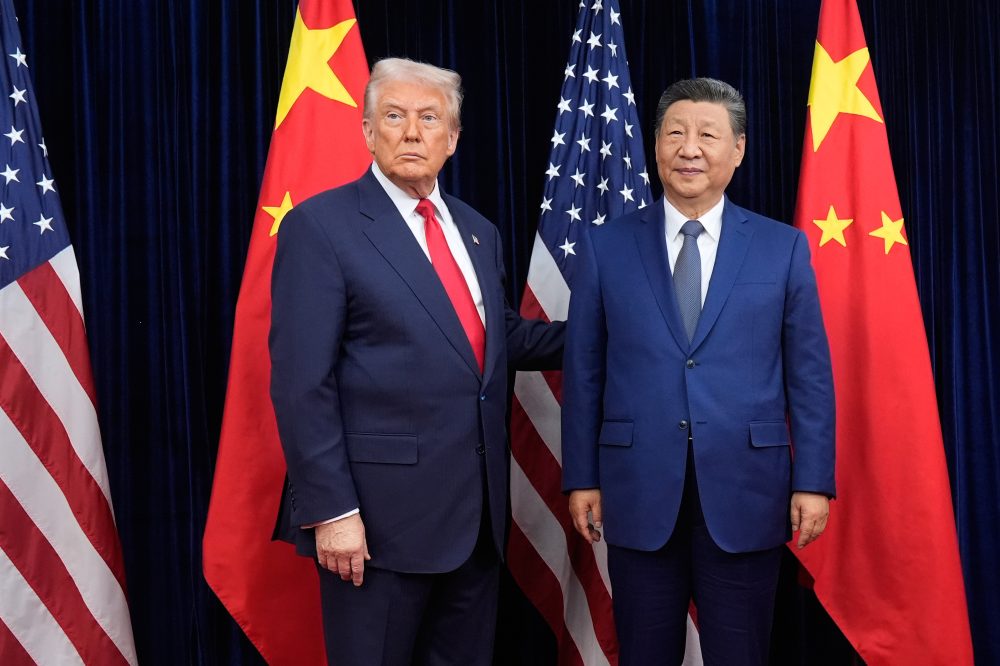
The renewed tariff uncertainty comes ahead of a highly anticipated visit by Trump to China in late March and early April, where he is expected to meet President Xi Jinping. Trade policy is likely to dominate discussions, with both sides seeking clarity on the direction of bilateral economic ties.
Other major economies are reacting cautiously. South Korea said it would continue consultations with Washington to maintain a “balance of interests,” particularly in sectors like automobiles, batteries, and semiconductors. Industry Minister Kim Jung-kwan called for coordinated efforts between public and private sectors to protect export competitiveness and diversify markets.
India has reportedly delayed sending a trade delegation to Washington to finalize an interim deal, citing fresh tariff uncertainty. Meanwhile, European Central Bank President Christine Lagarde warned that businesses require predictability, not prolonged legal disputes, emphasizing that new tariff measures must be clearly defined and constitutionally sound to avoid further disruption.
As legal and political uncertainties persist, global markets face renewed questions over the stability of U.S. trade policy and its broader economic impact.
Recent Random Post: