








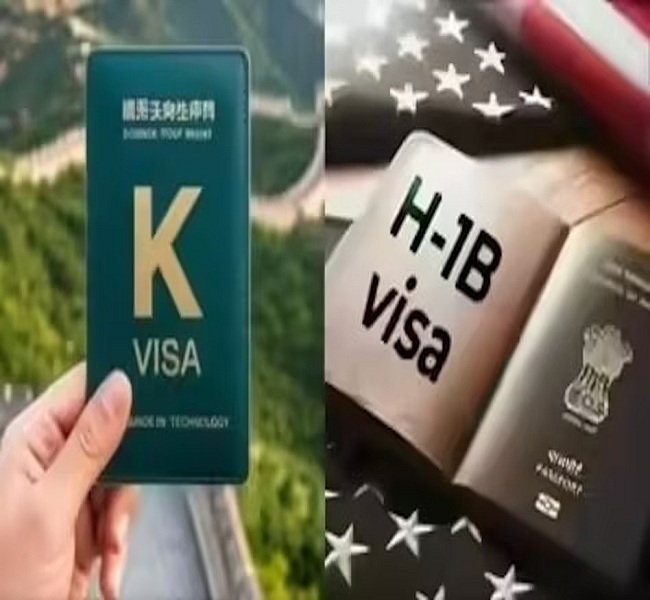
Starting October 1, 2025, China will introduce the K visa, a new category aimed at attracting young foreign STEM graduates and early-career researchers. Unlike traditional work visas, the K visa prioritizes the individual rather than an employer, allowing applicants to enter China and then choose to study, conduct research, join a lab, or launch a startup—without requiring employer sponsorship.
The policy follows the State Council’s Order No. 814, adopted in August, which amended entry-exit regulations to support scientific collaboration, entrepreneurship, and academic exchange.
Why this matters: H-1B under scrutiny
For decades, the US H-1B visa has been the dominant route for skilled migration. However, it remains tightly tied to employers:
US companies must petition on behalf of applicants.
Individuals cannot self-file.
Job changes require new approvals.
Recent reforms have made the H-1B route even more challenging. In September 2025, the US introduced a $100,000 annual fee per H-1B application, aimed at protecting domestic graduates and curbing perceived program abuse. The move has sparked frustration, particularly among Indian professionals, who make up the majority of H-1B recipients.
The K Visa Advantage
China’s K visa offers flexibility and speed, presenting a viable alternative for global STEM talent.
Eligibility:
Bachelor’s degree or higher in STEM fields.
Active researchers or educators at recognized institutions.
Permitted Activities:
Study and teaching.
Research and technology exchange.
Startup formation and business ventures.
Cross-border collaborations.
Benefits:
No employer invitation required.
Multiple entries and extended stays.
Faster processing and lower fees than the US.
Interest in China-based opportunities spiked 27% after the US H-1B fee announcement, according to VisaVerge.com. Recruiters report that startups and labs in China view the K visa as a way to quickly assemble teams without the legal bottlenecks of H-1B sponsorship.
Indian STEM Professionals Take Notice
Many Indian engineers and data scientists had traditionally planned careers around the H-1B pathway. The K visa now offers them a chance to explore incubators, labs, and business ventures in China without employer restrictions.
Competing Migration Models
Analysts see this as a broader policy divergence:
China: Positions foreign scientists as mobile partners, supporting flexibility across academia, startups, and industry.
US: Continues with an employer-first model, protecting domestic workers but limiting mobility for foreign professionals.
As universities, incubators, and tech labs across China prepare to welcome the first K visa cohort, early-career STEM talent faces a clear choice: China offers agility and freedom, while the US provides prestige and long-term residency prospects at rising costs.
Recent Random Post: