





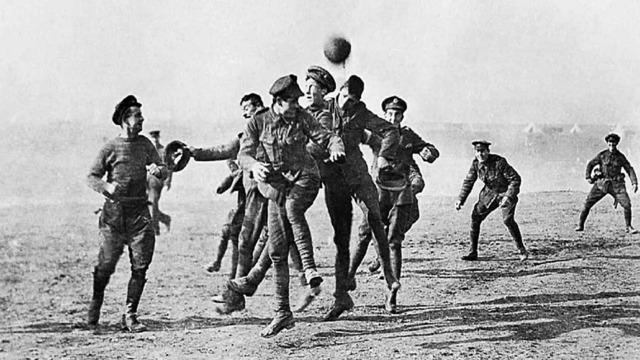
In December 1914, amid the devastation of World War I, something extraordinary unfolded on the Western Front. At a time when violence defined daily life and hope seemed distant, soldiers on opposing sides briefly laid down their weapons to observe Christmas. This moment, remembered as the Christmas Truce of 1914, stands as one of history’s most powerful examples of humanity emerging during conflict.
What began as an ordinary winter night soon became a rare pause in one of the deadliest wars ever fought.
Life on the Western Front Before Christmas
By the end of 1914, the war had already shattered expectations of a swift victory. Trench warfare dominated northern France and Belgium, locking soldiers into muddy, waterlogged lines separated by a narrow stretch of land known as No Man’s Land.
Conditions were brutal. Trenches were flooded, food was limited, sleep was irregular, and danger was constant. Soldiers lived among rats, disease, and relentless artillery fire. As Christmas approached, military leaders on both sides made their position clear: there would be no ceasefire. The war was to continue without pause.
Yet, events on the ground told a different story.
A Silent Night Without Orders
On Christmas Eve, British soldiers heard unfamiliar sounds drifting through the darkness—singing. From the German trenches came the melody of “Stille Nacht,” recognised by the British as “Silent Night.”
Initial suspicion gave way to cautious curiosity. British troops responded with carols of their own. Soon, German soldiers emerged carefully from their trenches holding candles and lanterns, calling out Christmas greetings in broken English. Without permission or coordination, a fragile, spontaneous truce began to take shape.
Enemies Meet as Men, Not Targets
By Christmas morning, soldiers from both sides stepped into No Man’s Land. Weapons were lowered. Hands were shaken.
British and German troops exchanged small gifts—cigarettes, chocolate, food, buttons, and family photographs. Together, they buried fallen soldiers who had lain between the trenches for weeks, holding joint prayers in both languages.
For many, it was the first time they had seen the so-called enemy up close—not as faceless threats, but as ordinary young men far from home. Soldiers later described the experience as a brief moment of brotherhood amid chaos.
The Famous Christmas Football Match
One of the most enduring stories from the truce involves football—and it truly happened.
Near the village of Frelinghien in France, soldiers organised an informal football match using a makeshift ball. There were no uniforms, no referees, and no formal rules. While the final score remains debated, the meaning was unmistakable.
Men who had been trying to kill one another just days earlier were now laughing and playing together on the same field. The image has since become a lasting symbol of peace during wartime.
Military Leaders Intervene
When news of the truce reached senior commanders, the response was swift. Military leaders feared such acts of goodwill would weaken discipline and undermine the will to fight.
Orders were issued to prevent any future truces. Artillery fire was deliberately scheduled during holidays, and units involved were warned or reassigned. By early January 1915, the war returned to its brutal routine. The Christmas Truce would never occur again on such a scale.
Why the Christmas Truce Still Matters
The Christmas Truce of 1914 did not end World War I. The conflict would continue for four more devastating years, claiming millions of lives.
Yet its significance endures. The truce revealed something fundamental about human nature: even amid violence, fear, and propaganda, individuals are capable of choosing empathy—if only briefly.
This moment was not planned by governments or negotiated by diplomats. It emerged naturally from shared memories of home, music, and a day traditionally associated with peace. More than a century later, the story continues to resurface each Christmas, reminding the world that history is shaped not only by battles and commands, but also by quiet acts of humanity.
On one frozen Christmas morning in 1914, the war paused—and compassion took its place.
Recent Random Post: