









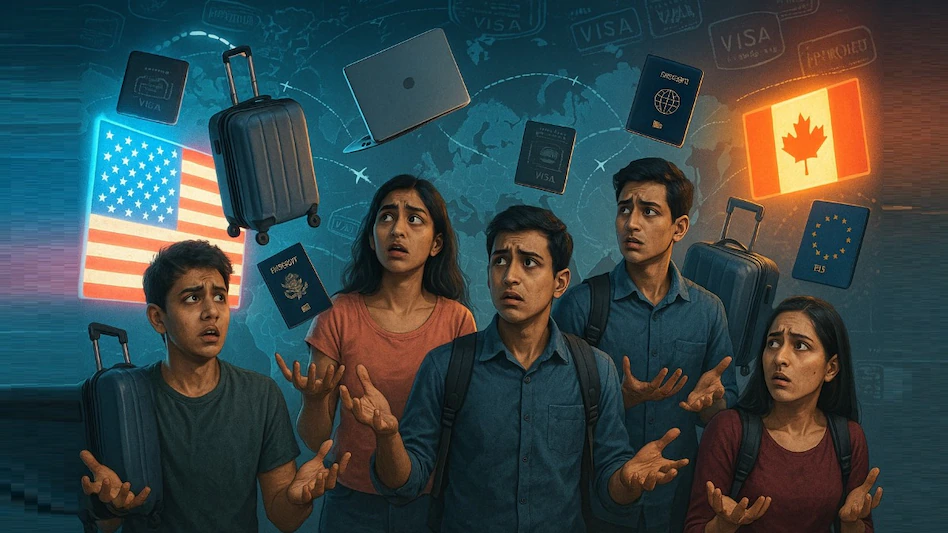
In recent years, the United States has seen a noticeable decline in the number of international students, especially from India and China — two countries that once sent the highest number of students for higher education. According to U.S.-based venture capitalist Debarghya Das, the U.S. is no longer the top destination it used to be, as international student enrollment has dropped by 18% since its 2017 peak. Among the hardest hit are Indian students, whose numbers have fallen by 42% compared to 2017.
The decline is particularly visible in the STEM (Science, Technology, Engineering, and Mathematics) fields, which have traditionally been the main attraction for international students in the U.S. Data from OPT Observatory, shared by Das, highlights that Indian STEM graduates have historically been more likely to stay in the U.S. on Optional Practical Training (OPT) visas — which allow them to work in their field for up to three years — compared to their Chinese counterparts. Around 80–90% of Indian STEM graduates used to stay back, while the figure for Chinese graduates was about 50–60%.
However, even these numbers have declined sharply in recent years. Participation in OPT has dropped by 25% among Chinese students and by 17% among Indian students, with the stay rate falling from 75% to 50% for China and from 95% to 78% for India. These figures suggest a major shift in student preferences and post-study career planning.
Data from the OPT Observatory also shows that Indian and Chinese STEM master’s graduates together represent nearly 30% of all international graduates in the U.S. across all degrees. Yet, fewer students from these two countries are now enrolling, and even fewer are choosing to stay after completing their studies. This trend can be clearly seen in charts shared by Das, showing how enrollments and OPT participation have steadily fallen over time due to stricter immigration rules, pandemic-related disruptions, and the growing appeal of other countries.
A mix of policy and global factors appears to be driving this change. Tightened immigration laws and uncertainty surrounding H-1B visas have made the U.S. a less attractive option for long-term career opportunities. Meanwhile, countries such as Canada, Australia, the U.K., and several European and Gulf nations have introduced student-friendly policies, offering clearer post-study work rights and easier pathways to permanent residency.
For India, this decline is particularly significant because Indian students make up a large portion of the U.S. STEM talent pool. The 42% drop since 2017 suggests that India’s top students are reconsidering the U.S. as their first choice for education and career growth. As Debarghya Das pointed out, fewer Indian students are now choosing to study or stay in the U.S., signaling a larger global shift.
This trend highlights the urgent need for both countries to review their education and immigration frameworks. If the U.S. wants to retain its status as a hub for global talent, and India wishes to maintain strong academic and innovation ties with it, both nations may need to rethink how they support international students and create sustainable post-study opportunities.
Recent Random Post: