









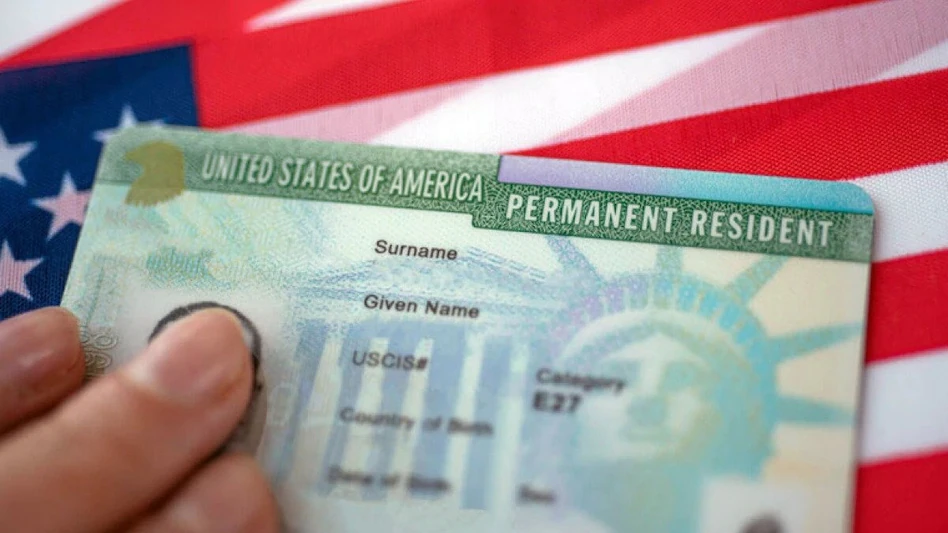
The U.S. Department of Homeland Security (DHS) is preparing a sweeping reform of its employment-based green card system, with a proposed rule expected by January 2026 that could redefine how high-skilled foreign professionals qualify for permanent residency.
The upcoming regulation aims to modernize criteria for individuals with extraordinary abilities, outstanding professors, and researchers, ensuring that the U.S. immigration process remains fair, transparent, and aligned with the nation’s goal of attracting top global talent.
According to DHS’s draft abstract, the new rule would “update provisions governing extraordinary ability and outstanding professors and researchers; modernize outdated provisions; and clarify evidentiary requirements for first preference classifications, second preference national interest waiver (NIW) classifications, and physicians of national and international renown.”
This initiative forms part of the Biden administration’s broader effort to streamline immigration pathways for foreign professionals, particularly those driving innovation in science, technology, and research.
Surge in O-1A Visa and NIW Applications
Following policy guidance introduced in 2022 encouraging the use of the O-1A visa and National Interest Waiver (NIW) categories, U.S. Citizenship and Immigration Services (USCIS) has recorded a marked increase in applications.
The O-1A visa, a non-immigrant category for individuals with extraordinary ability in fields such as science, education, business, or athletics, allows high-achieving professionals to work in the U.S. based on their proven expertise.
O-1A filings rose from 7,710 in FY 2021 to 10,010 in FY 2023, maintaining an approval rate above 90%.
Similarly, the NIW program—which allows foreign nationals with advanced degrees or exceptional ability to bypass the traditional labor certification process if their work benefits U.S. national interests—saw a 51% jump in applications between FY 2021 and FY 2022, reaching 39,810 in FY 2023.
This surge underscores growing interest among professionals seeking to contribute to areas of strategic national importance such as science, technology, and healthcare.Implications for Future Applicants
The final rule, still under drafting, will open for public comment once published in early 2026. Universities, employers, and advocacy organizations are expected to provide feedback on the proposed changes.
While the revisions could standardize and strengthen the evaluation process for high-skilled immigrants, they may also raise the evidentiary bar for applicants seeking permanent residency based on extraordinary achievement or national interest.
If implemented, the updated framework would represent one of the most significant updates to U.S. employment-based immigration in decades—potentially reshaping how the country attracts and retains global talent.
Recent Random Post: