








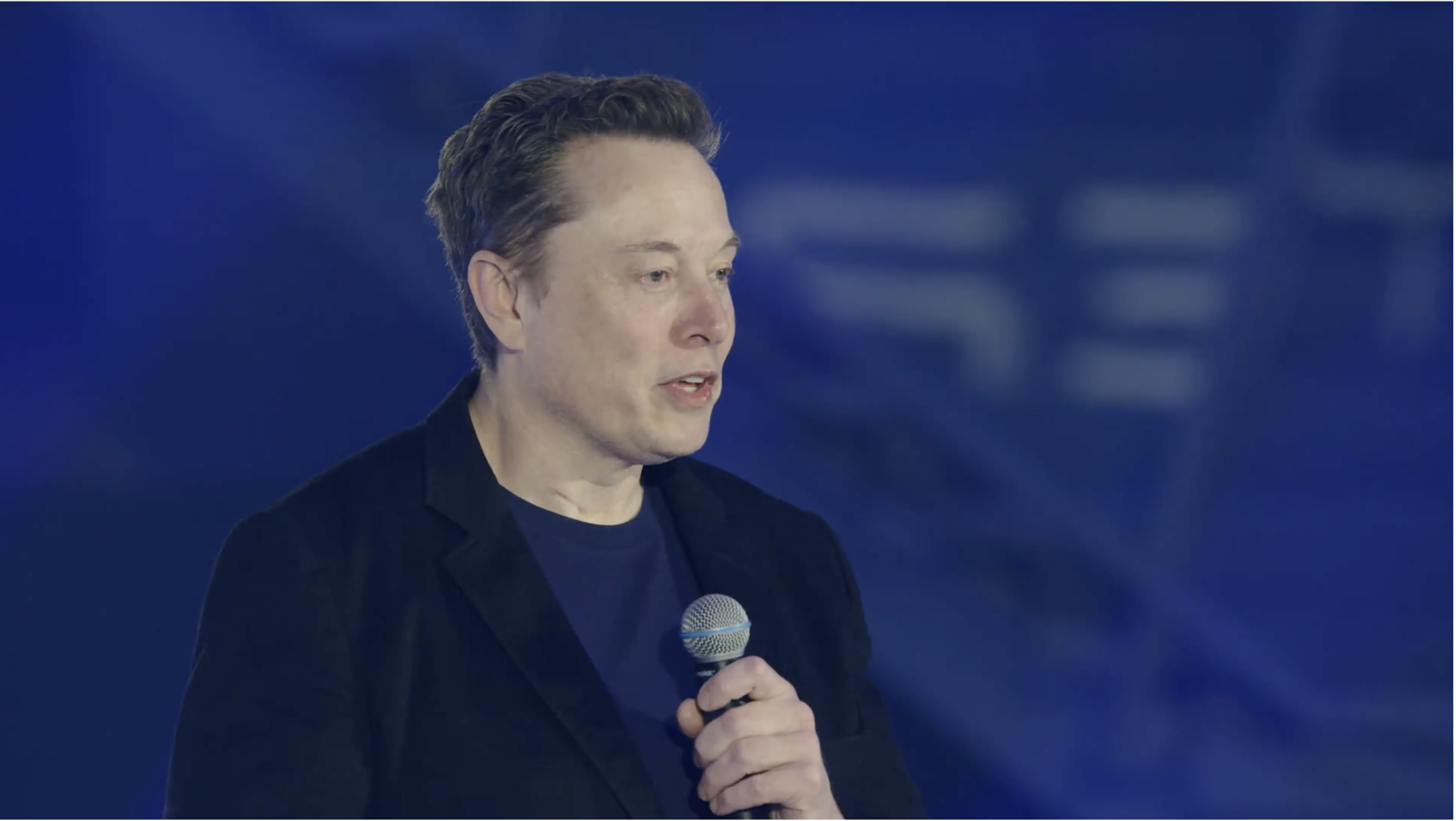
Elon Musk is pursuing one of his most ambitious vertical integration strategies yet with a proposed semiconductor manufacturing project called “TeraFab.” Valued at $20–25 billion, the project aims to consolidate chip design, fabrication, and deployment under a single roof, extending the ecosystem even into space. The goal is clear but audacious: reduce reliance on external foundries such as TSMC and Samsung while creating a tightly integrated AI hardware ecosystem across Musk’s companies, including Tesla, SpaceX, and xAI.
TeraFab is envisioned as a semiconductor fabrication facility that will design, test, and manufacture custom AI chips exclusively for Musk’s companies. Planned to be located on Tesla’s campus in eastern Travis County, Austin, Texas, the facility is intended to give Musk direct control over performance, costs, and supply, bypassing the need for third-party manufacturers. Unlike traditional fabless models where companies design chips but outsource manufacturing, TeraFab will internalize the entire stack, including advanced packaging, memory integration, and inference-optimized silicon tailored for specific applications across Tesla, SpaceX, and xAI.
The first wave of TeraFab chips will focus on AI inference, designed to run models quickly and efficiently. These chips are expected to power Tesla’s self-driving cars, robotaxi fleet, and the Optimus humanoid robot, utilizing a 2nm process—the cutting edge of semiconductor manufacturing. Smaller nodes typically deliver higher performance and better energy efficiency. SpaceX’s D3 chips, designed for AI-powered satellites, will also be part of the project.
What sets TeraFab apart is Musk’s plan to take computing into space. The proposal includes building large, solar-powered satellites, each approximately 170 meters long, capable of generating around 100 kilowatts of power. These satellites would function as orbiting data centers. Solar power in space is roughly five times stronger than on Earth, potentially enabling cheaper and more efficient computing. The long-term ambition is staggering: up to 1 terawatt of AI computing capacity in space, alongside 100–200 gigawatts of compute capacity on Earth.
Despite its promise, TeraFab faces significant challenges. Neither Tesla nor SpaceX has experience running a semiconductor fabrication facility, one of the most complex and capital-intensive industrial operations. The project will compete in a market dominated by established players like TSMC, which has decades of expertise in refining manufacturing processes and supply chains. Furthermore, Nvidia continues to dominate the AI hardware market, with its GPUs powering most AI workloads today. Musk’s strategy relies on vertically integrated, task-specific chips that could outperform general-purpose GPUs in applications such as autonomous driving and robotics.
If successful, TeraFab could redefine the AI infrastructure landscape, shifting from a fragmented global supply chain to tightly integrated, company-owned stacks spanning silicon, software, and deployment. It also highlights a broader trend in the AI race: control over computing resources, not just AI models, may determine long-term competitive advantage.
Recent Random Post: