









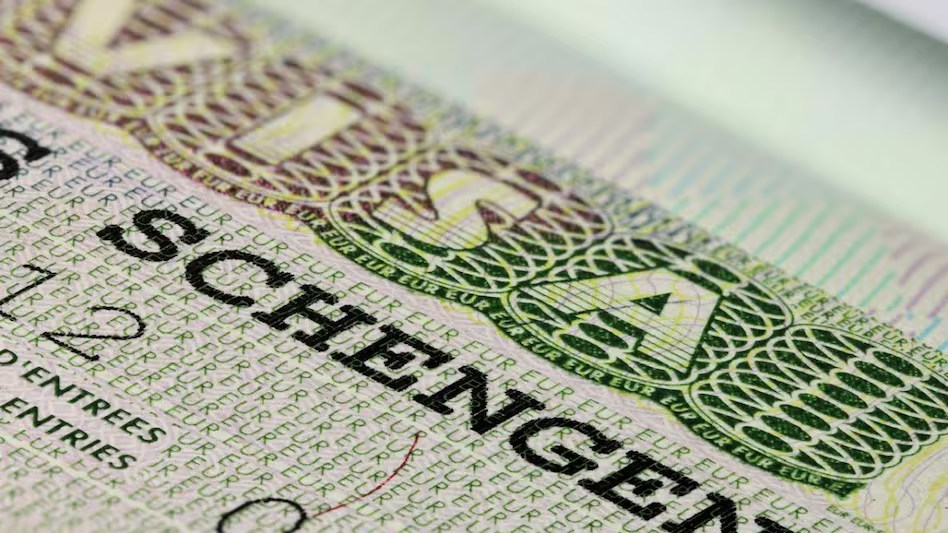
Brussels | October 8, 2025 — The European Parliament has approved new legislation strengthening the EU’s ability to suspend or revoke visa-free travel for non-EU countries whose citizens pose security or migration risks or whose governments fail to respect human rights and international law.
The revised framework applies to 61 countries currently benefiting from visa-free entry into the Schengen Zone for up to 90 days within a 180-day period.
Under the new system, the European Commission can temporarily suspend visa-free access if there are concerns about security threats, serious criminal activity, rising overstays, or an increase in rejected asylum applications. If such issues persist, the suspension can be made permanent. To date, Vanuatu remains the only country to have lost its visa-free status under previous rules.
Expanded Grounds for Suspension
The reform broadens the list of reasons that can trigger visa revocation. These now include:
Hybrid threats, such as the manipulation of migration by a foreign state.
Investor citizenship schemes (“golden passports”).
Violations of international law, UN resolutions, or court rulings.
Human rights abuses, where selective bans can target officials rather than entire populations.
Quantitative thresholds have been set: a 30% increase in serious crimes or overstays, or a 20% approval rate for asylum applications, will prompt review. The Commission may adjust these benchmarks in exceptional cases based on supporting data.
Legislative Process and Implementation
The bill passed with 518 votes in favor, 96 against, and 24 abstentions. Following formal approval by the EU Council, it will take effect 20 days after publication in the Official Journal of the European Union.
Countries Potentially Affected
The updated framework covers all visa-exempt states, including Australia, Canada, Japan, the United States, the United Kingdom, Ukraine, Brazil, South Korea, and others across Latin America, Asia, and the Pacific.
Goal of the Reform
The EU says the reform aims to maintain the integrity of visa-free travel by ensuring compliance with security standards, human rights commitments, and international obligations — giving Brussels a more flexible and targeted mechanism to address emerging global risks.
Recent Random Post: