







For many Indian students, studying in the United States represents years of academic effort, financial investment, and the pursuit of a better future. However, in some cases, it is not a university’s decision but a visa officer’s judgment that brings these aspirations to an abrupt halt.
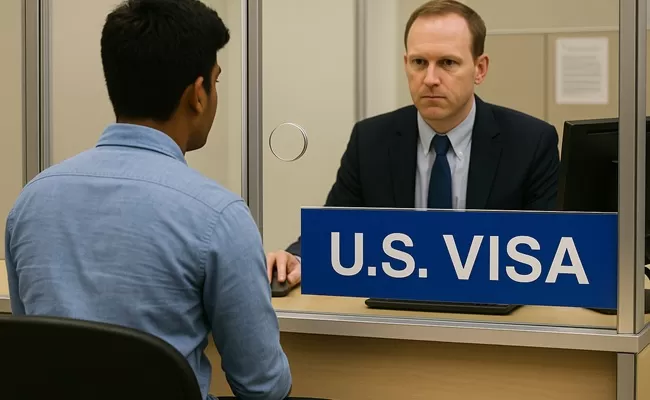
In a recent case widely discussed on Reddit, an engineering graduate who had secured admission to a top-15 U.S. university to pursue a Master’s degree in Computer Science was denied an F-1 student visa. Despite strong academic credentials and two years of work experience, his application was rejected under Section 214(b) of the U.S. Immigration and Nationality Act, which allows visa officers to refuse visas if they believe the applicant may not return to their home country after completing their studies.
The student, who had initially been admitted for the Fall 2025 semester but deferred to Spring 2026 due to visa processing delays, shared his disappointment. After waiting in line for three hours at the consulate, he was informed that his visa was denied. He described the experience as disheartening, stating that the process felt subjective, with decisions often influenced by the officer’s impression rather than the applicant’s qualifications.
He also suggested the need for reforms such as detailed reasoning for rejections, an appeal mechanism, and allowing written statements of purpose instead of brief interviews which often fail to capture an applicant’s full intent.
Citing growing xenophobia, tightening visa norms, and uncertain job prospects in the U.S., the student has chosen not to reapply. “My peace and self-respect mean more to me than a degree,” he wrote, deciding instead to continue his career in India.
The case reflects a broader concern among international students regarding transparency and fairness in the U.S. student visa process.
Recent Random Post: