









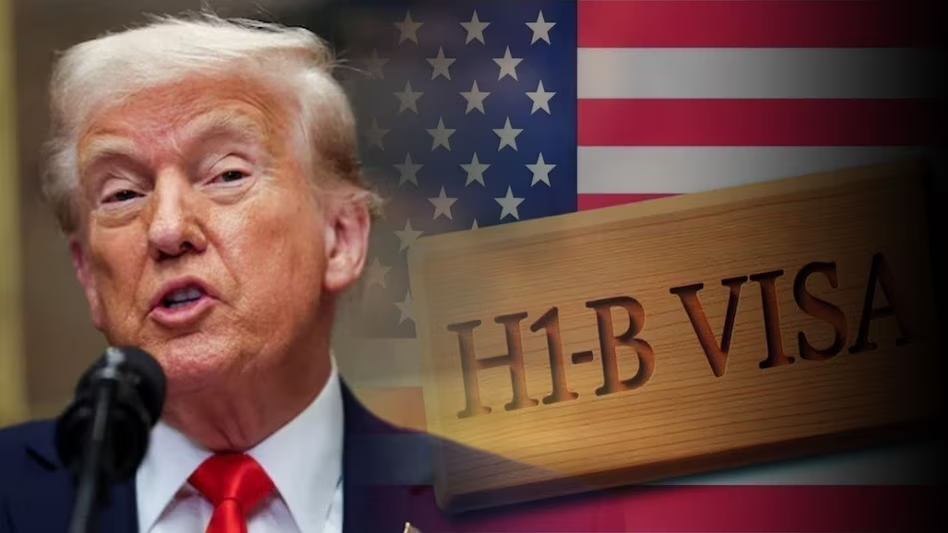
A coalition of unions, employers, and religious organizations has filed a federal lawsuit in San Francisco challenging President Donald Trump’s order imposing a $100,000 fee on new H-1B visas. Filed on Friday, this marks the first legal challenge against the proclamation issued two weeks ago, which is part of the administration’s broader effort to tighten immigration policies.
The plaintiffs include the United Auto Workers union, the American Association of University Professors, a nurse recruitment agency, and several religious groups. They argue that while the president can limit the entry of certain foreign nationals, he cannot override the law that created the H-1B program. “The proclamation turns the H-1B program into a system where employers must either ‘pay to play’ or seek a ‘national interest’ exemption, opening the door to selective enforcement and corruption,” the lawsuit states.
The White House defended the measure, with spokesperson Abigail Jackson stating that it aims to prevent companies from “spamming the system and driving down American wages, while providing certainty to employers who need to bring the best talent from overseas.”
Under the H-1B program, U.S. employers in specialized fields, particularly technology, hire foreign workers through an annual allocation of 65,000 visas, plus 20,000 additional slots for individuals with advanced degrees. Currently, sponsoring employers pay fees ranging from $2,000 to $5,000. Trump’s new order requires an additional $100,000 payment for new applicants, though current visa holders and those who applied before September 21 are exempt.
The president justified the fee by citing federal immigration law, claiming that “large-scale replacement of American workers” by lower-wage foreign labor undermines national security and discourages Americans from pursuing careers in science and technology.
The plaintiffs, however, contend that the administration bypassed proper rulemaking processes and that imposing such exorbitant fees will stifle innovation. They emphasize that the authority to levy taxes or fees rests with Congress, not the president.
According to U.S. government data, India remains the largest beneficiary of the H-1B program, receiving 71% of visas last year, followed by China with 11.7%.
Recent Random Post: