








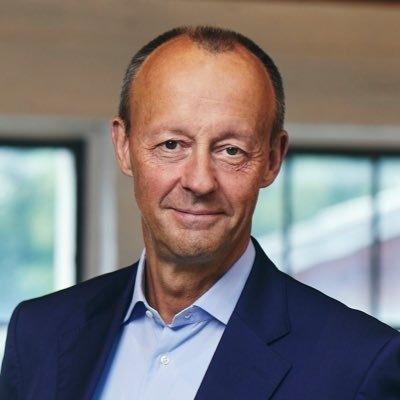
Friedrich Merz, Germany’s Chancellor-in-waiting, on Monday announced the Christian Democratic Union (CDU)’s nominees for major ministerial posts in the incoming coalition government. Merz is anticipated to be formally elected Chancellor next week in a session of the Bundestag, the lower house of Parliament.
Among the key appointments, Johann Wadephul, currently Deputy Parliamentary Group Leader for the CDU/CSU, has been nominated as the next Foreign Minister. Wadephul, 62, has served in the Bundestag since 2009 and is recognized as a strong advocate for European integration.
The Ministry of Economic Affairs will be led by Katherina Reiche, a former Bundestag member and the current Chief Executive Officer of Westenergie, a subsidiary of the energy giant E.ON. Reiche’s extensive experience in the energy sector is seen as a strategic asset as Germany navigates its energy transition and industrial modernization.
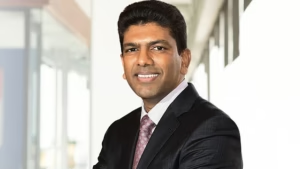
Patrick Schnieder has been selected to serve as Minister of Transport, while Karsten Wildberger, CEO of Ceconomy AG and MediaMarktSaturn Retail Group, has been tapped to head a newly established Ministry for Digitalization and Modernization. The creation of this ministry underscores the incoming government’s focus on strengthening Germany’s digital infrastructure and enhancing its global competitiveness.
Born in 1955 in North Rhine-Westphalia, Friedrich Merz studied law and began his career as a judge at the district court in Saarbrücken from 1985 to 1986. He subsequently served as a Member of the European Parliament (1989–1994) and then as a Member of the Bundestag (1994–2009), where he notably led the CDU/CSU parliamentary group from 2000 to 2002.
After stepping away from active politics in 2009, Merz pursued a successful career in the private sector, working for an international law firm and holding various leadership roles, including Chairman of the Atlantic Bridge association, which fosters German-American relations. He returned to the political arena in 2018 following Chancellor Angela Merkel’s announcement that she would not seek re-election. Merz later assumed leadership of both the CDU and the CDU/CSU parliamentary group.
Widely regarded as a “pro-business” figure, Merz has pledged to revitalize Germany’s economy, targeting sustained annual growth exceeding two percent. His platform also calls for a more assertive immigration policy and a recalibration of Germany’s foreign relations, advocating for greater European self-reliance and a reduced dependence on the United States.
With a strong track record bridging politics, business, and international relations, Merz is positioning himself to usher in a new chapter for Germany, centered on economic dynamism, digital innovation, and global leadership.
Recent Random Post: