









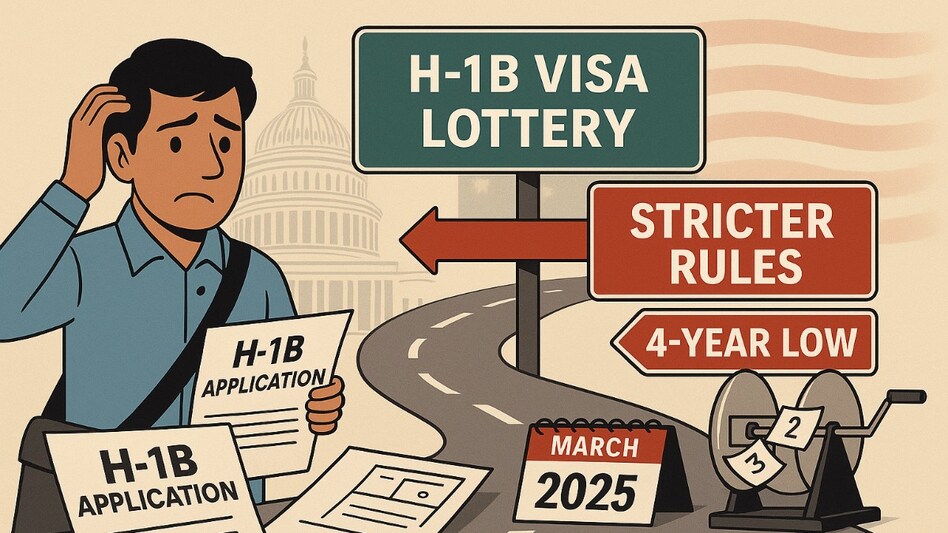
 The number of eligible registrations for the H-1B visa lottery fell significantly to approximately 343,981 for the FY2026 cap season, marking a 26.5% decline from the 470,342 entries recorded in FY2025. According to data released by the U.S. Citizenship and Immigration Services (USCIS) on Tuesday, this represents the lowest number of eligible registrations in four years.
This sharp drop follows the second year of USCIS’s revised lottery framework, which allocates equal chances to each individual registrant regardless of how many employers submit applications on their behalf. The change was implemented to prevent manipulation of the system by eliminating duplicate registrations—a tactic previously used by some employers to increase selection odds.
The impact of this reform has been substantial. Multiple registrations now make up just over 2% of all eligible entries, a steep decline from over 50% in the prior fiscal year. However, the number of individuals with single eligible registrations has also declined, indicating a broader contraction in participation.
The FY2026 cycle was also the first to operate under the new $215 registration fee, a significant increase from the previous $10 charge, aimed at discouraging bulk or speculative filings. Despite the reduced registration volume, demand continues to far exceed the annual cap of 85,000 visas designated for specialty occupations.
Amid these procedural shifts, H-1B visa holders face heightened challenges at U.S. ports of entry. Reports indicate that even legally compliant professionals are experiencing visa cancellations or re-entry denials—particularly those returning from India—highlighting growing unpredictability around visa transfer and revalidation procedures.
The H-1B program, a vital channel for U.S. employers seeking to recruit highly skilled foreign talent, especially in the technology sector, remains under evolving scrutiny. While the Biden administration has maintained several reforms introduced during the Trump era, the cumulative effect of tighter regulations, higher costs, and increased enforcement is reshaping the H-1B landscape in profound ways.
Recent Random Post: