






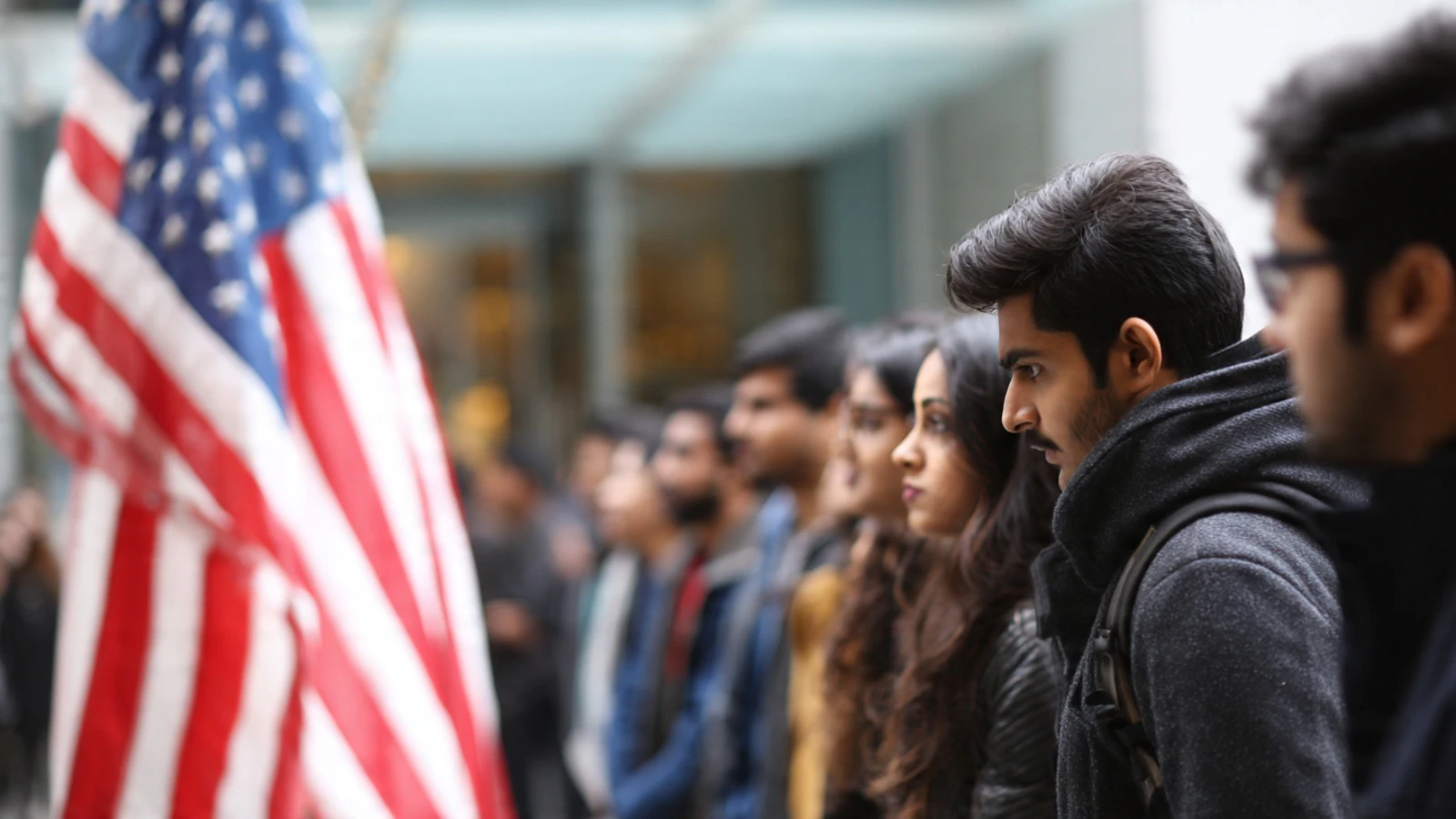
The situation for Indian students in the USA on F-1 visas has become extremely challenging. Many are unsure of their next steps after completing the 12-month OPT (Optional Practical Training) period. Securing an H-1B visa has become much harder than before, leaving students in a state of uncertainty.
Many students are torn between staying in the USA and risking the expiration of their OPT without H-1B approval, or returning to India immediately. With part-time jobs restricted and frequent ICE checks and raids, relying on financial support from parents in India—often Rs 2–3 lakh per month—is both burdensome and insufficient, especially if H-1B approval is not guaranteed.
“I completed my Master’s in Data Science, and my OPT ends in four months. Every day starts with job applications and ends with anxiety. My parents already spent nearly Rs 75 lakh on my education. I don’t know whether to take another course, return to India, or just wait and hope for H-1B,” says a student in Dallas.
“I am working in a small consultancy on OPT, but the project is not stable. I came to the US with big dreams, but now my biggest goal is simply to maintain my legal status,” says an engineering graduate in Chicago.
The plight of H-1B visa holders is equally stressful. While they have jobs and earnings, their freedom to travel is severely restricted. Several H-1B employees who traveled to India lost their jobs due to postponed visa stamping appointments, preventing their return to the US on time.
“My mother is ailing in Vijayawada. I want to meet her, but I am confined to video calls. I cannot risk losing my job because I have loans to clear,” says an H-1B employee in Connecticut.
“My brother’s wedding is in a few months. But I decided not to go. I will have to watch it through live streaming. I am not sure if I will be allowed back into the US if I leave,” says a banking professional on an H-1B visa in New Jersey.
“I feel like I am in jail, though I am well paid and living comfortably. It feels like a jail because I cannot visit my native place in Siddipet,” says another H-1B employee.
In some cases, families have had to make major adjustments. “My friend Avinash recently got married in the US. His parents wanted a wedding in India, but he had to hold it in the US because of H-1B restrictions. His parents watched the ceremony via live stream from Hyderabad,” says Naveen, a student.
Overall, many students and H-1B visa holders have decided to avoid traveling to India until at least November 2028. While some hope conditions may improve after 2028, no one can predict the outcome. The current challenge stems from stricter enforcement of existing visa regulations, and whether future administrations will change these policies remains uncertain.
The reality is clear: the system remains rigid, and Indian students and H-1B holders must navigate complex legal and financial pressures while trying to maintain stability in the USA.
Recent Random Post: