









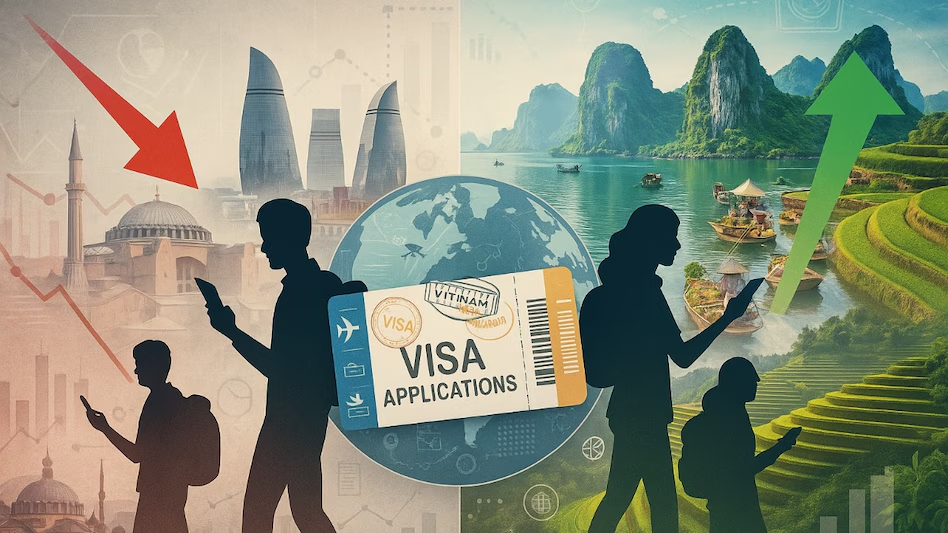
In the wake of Turkey and Azerbaijan’s public support for Pakistan following Operation Sindoor, Indian travellers have responded with decisive action. Leading visa processing platform Atlys reports a 42% decline in visa applications to the two countries, signaling a swift and emotionally charged shift in public sentiment. Notably, within just 36 hours of the diplomatic fallout, the number of Indian users abandoning mid-way through their visa application for Turkey or Azerbaijan surged by 60%.
This shift marks a sharp contrast to the start of 2025, when Turkey and Azerbaijan witnessed a 64% year-on-year growth in Indian visa applications between January and March. Popular destinations such as Istanbul, Baku, and Cappadocia had been gaining traction among Indian tourists—especially among younger, first-time travellers—due to their affordability, shorter flight durations, and rich cultural experiences.
However, recent developments have led to an abrupt reversal. Data from Atlys indicates that metro cities like Delhi and Mumbai saw a 53% drop in Turkey-bound visa interest, while Tier-2 cities like Indore and Jaipur registered a more moderate 20% decline.
Group travel was the hardest hit, with family and group visa requests falling by 49%, compared to a 27% dip in solo and couple applications. The most significant behavioural shift was observed among travellers aged 25 to 34, who accounted for over 70% of all mid-process visa drop-offs. Female travellers, in particular, demonstrated faster and more decisive pivots, being 2.3 times more likely to switch to alternative destinations such as Vietnam and Thailand.
In contrast to the decline in West Asian interest, Southeast Asia is witnessing a surge. Visa applications for Vietnam, Indonesia, and Egypt have risen by 31%, driven primarily by young, urban, cost-conscious travellers seeking politically neutral destinations with straightforward digital visa processes.
“With summer holidays approaching, we expect demand for Southeast Asian destinations to rebound sharply by June and July,” said Mohak Nahta, Founder and CEO of Atlys. “This trend is being led by digitally savvy metro travellers who prioritize affordability, agility, and emotional alignment in their travel choices.”
Nahta further emphasized the deeper implications of the trend:
“The reaction wasn’t scattered—it was sharp and behavioural. People didn’t need to be told to avoid certain destinations. They simply moved on, guided by instinct, information, and access to alternatives. That’s what modern travel looks like—emotionally intelligent, logistically agile, and empowered by platforms that enable fast decisions. In support of national sentiment, we’ve also paused all marketing initiatives related to Turkey and Azerbaijan.”
As geopolitical contexts continue to shape consumer choices, the travel industry is witnessing a fundamental evolution—where decisions are driven not just by price and convenience, but by values, awareness, and digital empowerment.
Recent Random Post: