









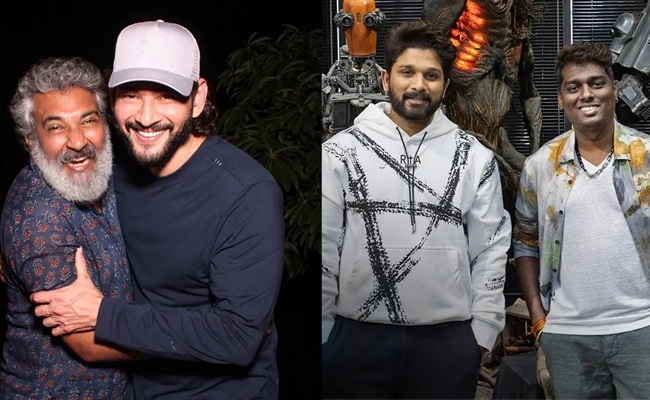
The year 2025 has emerged as a major setback for the Telugu film industry, marking a sharp contrast to the nearly eight years of consistent theatrical growth and record-breaking revenues from the non-theatrical market.
In the immediate post-COVID phase, Telugu cinema benefited enormously from the OTT boom, with streaming platforms aggressively acquiring digital rights—often at highly inflated prices. However, the OTT ecosystem has since undergone a significant correction. Leading platforms have become far more cautious, drastically cutting back on content acquisition budgets.
As a result, even reputed production houses have been caught off guard by the relatively modest offers now being quoted for their films. In such a climate, it is both misleading and irresponsible to propagate claims of “record-breaking” OTT deals that are completely out of sync with current market realities.
Last month, several media outlets and social media handles hyped reports suggesting that SS Rajamouli allegedly rejected an ₹800 crore OTT offer, supposedly holding out for an even bigger deal. This narrative appears to be nothing more than a promotional gimmick. No OTT platform would realistically commit such an exorbitant amount, especially when the film’s production budget itself does not justify that valuation. Had such an offer genuinely existed, it is highly unlikely that any filmmaker—including Rajamouli—would have turned it down.
Now, a similar buzz is being created around the Allu Arjun–Atlee project, with claims that Netflix has closed an OTT deal worth ₹600 crore. These figures, too, seem grossly exaggerated. For context, Netflix reportedly paid around ₹285 crore for Dhurandhar—and that was after the film proved itself as a mega blockbuster at the box office.
Even under the most optimistic assumptions, it is unrealistic to expect OTT platforms to go beyond the ₹300–350 crore range for Telugu films, even for projects headlined by stars like Allu Arjun or helmed by directors of SS Rajamouli’s stature.
By floating astronomical figures such as ₹600 crore and ₹800 crore, certain media outlets and social media accounts are not only misleading audiences but also causing long-term damage to industry perception and expectations. These inflated narratives create false benchmarks, widening the gap between hype and market reality—and ultimately hurting the very industry they claim to celebrate.
Recent Random Post:
శ్రీ పవన్ కళ్యాణ్ గారి ప్రసంగం || ఆర్సెలార్ మిట్టల్ నిప్పన్ స్టీల్ ప్లాంట్ శంకుస్థాపన కార్యక్రమం
శ్రీ పవన్ కళ్యాణ్ గారి ప్రసంగం || ఆర్సెలార్ మిట్టల్ నిప్పన్ స్టీల్ ప్లాంట్ శంకుస్థాపన కార్యక్రమం