






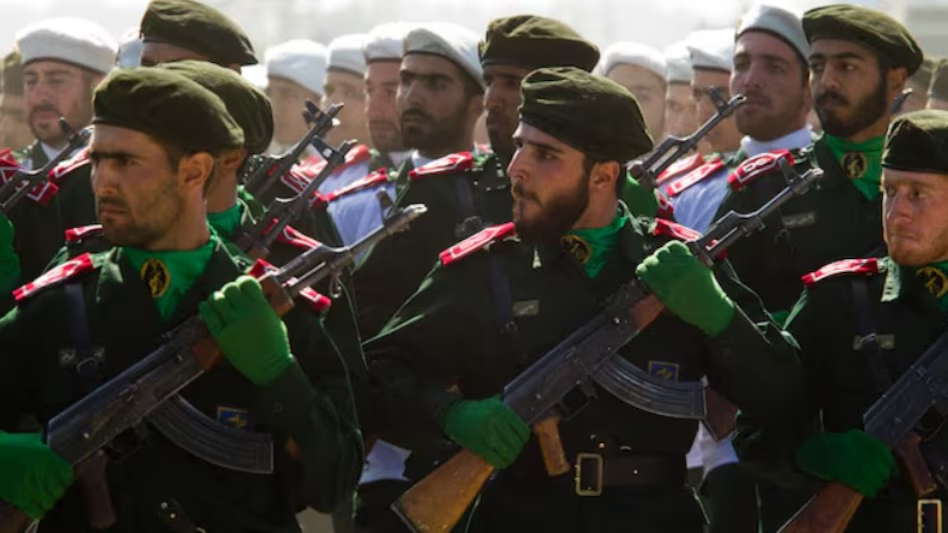
The Islamic Revolutionary Guard Corps (IRGC) has reportedly emerged as the dominant power center in Iran amid an escalating internal political crisis, according to multiple media reports. The development comes alongside claims by US President Donald Trump that negotiations to end the Iran conflict were underway with moderate factions—claims that Tehran has firmly denied.
As per a report cited by India Today from Iranian media sources, the IRGC has assumed control over key state functions during a deepening political deadlock involving President Masoud Pezeshkian, who is widely regarded as a moderate voice. Reports suggest that Pezeshkian has been increasingly sidelined as the power struggle intensifies.
The situation has reportedly been further complicated by uncertainty surrounding Iran’s Supreme Leadership structure. Following claims of major losses in US-Israeli strikes at the start of the conflict, including reports about Ayatollah Ali Khamenei and senior leadership figures, attention has shifted to Mojtaba Khamenei, who was reportedly named as a successor but has since not been seen publicly. Unverified speculation has even raised questions about his health condition, though no official confirmation has been provided.
In this leadership vacuum, the IRGC is said to be operating through a military council of senior commanders, taking charge of daily governance and strategic decisions. The group has also allegedly tightened control over internal communications and restricted access to sensitive government channels.
Reports further indicate that the IRGC has intervened in key political appointments, blocking proposals made by President Pezeshkian and insisting that critical roles remain under military oversight during the ongoing crisis. This has further deepened tensions between the presidency and the powerful military organization.
The IRGC, originally formed after the 1979 revolution as a paramilitary force, has over the years expanded its influence across Iran’s political and economic landscape, including sectors such as oil, banking, transport, and real estate. Amid the current turmoil, it is reportedly asserting even greater authority, including strategic control over vital routes like the Strait of Hormuz, intensifying concerns over regional stability and global energy security.
Recent Random Post: