









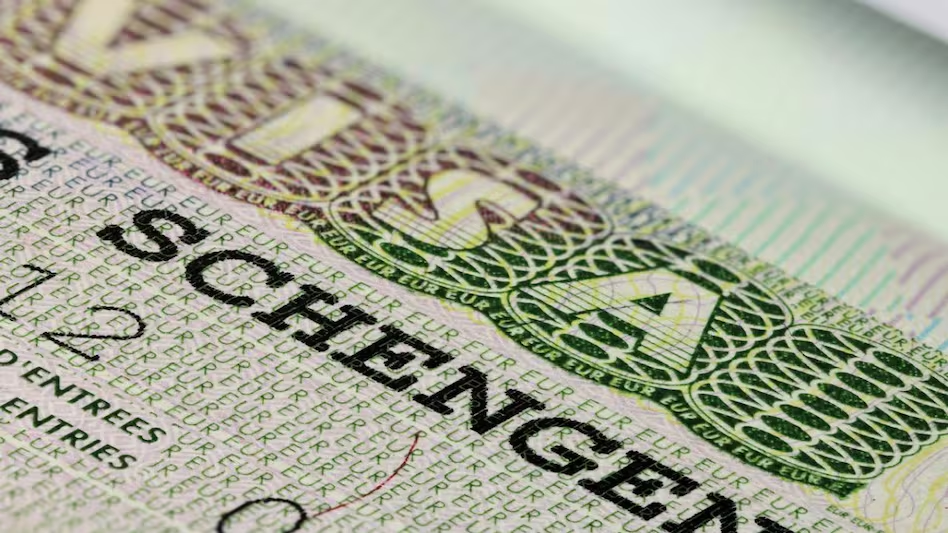
Italy is set to revolutionize its Schengen visa process with a fully digital system starting June 1, 2026, allowing travellers to apply, upload documents, and track applications online without visiting embassies, according to VisaHQ.
The new platform, managed by the Italian Ministry of Foreign Affairs, will consolidate applications for both short-stay (type C) and long-stay (type D) visas into a single government-run portal. It will handle the entire workflow—from form submission and document uploads to fee payments and real-time status tracking—making Italy the first major Schengen country to implement a paper-free visa system ahead of wider European reforms, including the Entry/Exit System and the ETIAS travel authorization expected later in 2026.
For most repeat travellers, the process will be entirely remote. Biometric data already stored in the Visa Information System (VIS) will be reused, eliminating the need for new in-person appointments. However, first-time applicants and certain complex cases will still require a single visit for biometric enrollment or interviews.
The digital transition is expected to significantly streamline travel. Corporate travellers and global mobility teams will benefit from centralised tracking, while employees posted abroad can renew visas online without visiting multiple consulates. Authorities are advising applicants and companies to digitize key documents, such as passports, bank statements, insurance papers, and accommodation proofs, in the required format. A sandbox environment will open in April for travel management and relocation firms to test the system in advance.
Italy’s move is part of a broader push toward digital borders in the Schengen region. Countries including France, Spain, and Germany are expected to implement similar systems between 2027 and 2028 if Italy’s rollout proves successful.
EU officials view national digital visa portals as a crucial step toward a unified pre-arrival screening framework for non-EU travellers. While airport biometric checks under the Entry/Exit System will continue, Italian authorities estimate overall processing times could drop by at least 40%, allowing consular staff to focus on decision-making rather than data entry. Travellers are advised to ensure passports have at least six months’ validity and to prepare high-resolution digital copies of all required documents ahead of the transition.
Recent Random Post: