









Confusion has emerged over whether the recently announced ceasefire between the US, Israel, and Iran also includes Lebanon, with key stakeholders offering conflicting interpretations of the agreement.
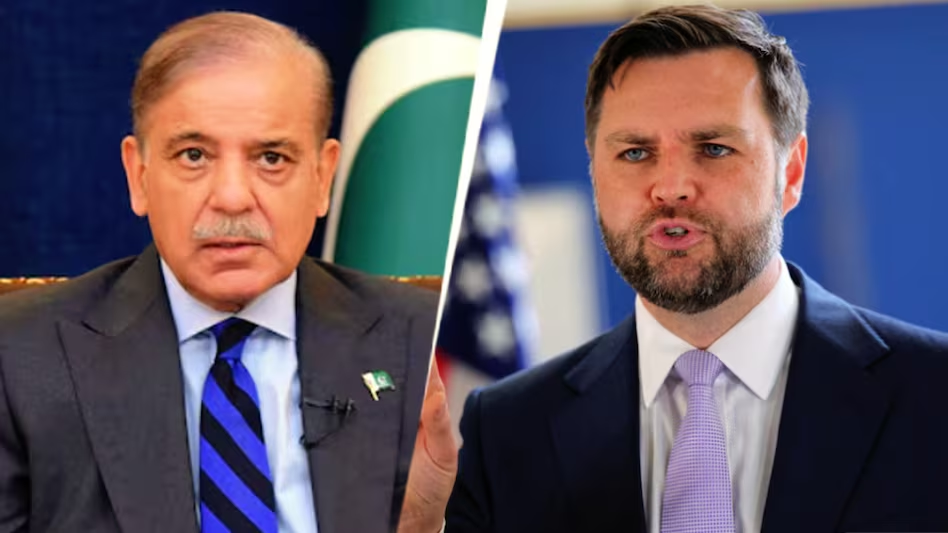
US Vice President JD Vance clarified that Lebanon was not part of the ceasefire understanding, stating that Iran may have misunderstood the scope of the deal. According to him, the agreement was strictly focused on Iran and US allies, including Israel and Gulf Arab nations, and did not extend to Lebanon.
However, this view appears to contrast with statements from mediator Pakistan. Prime Minister Shehbaz Sharif had earlier announced that Iran, the United States, and their allies had agreed to an immediate ceasefire “including Lebanon and elsewhere,” and even invited delegations from both sides for further peace talks in Islamabad.
The disagreement over the ceasefire’s scope comes amid continued violence in the region. Israel reportedly carried out strikes in Lebanon, resulting in significant casualties, with Lebanon’s civil defence reporting 254 deaths across multiple locations, including Beirut. Some of the strikes were said to have occurred without prior evacuation warnings, escalating tensions further.
Iran, in response, argued that ceasefire violations make the agreement effectively invalid, while Hezbollah stated that it launched rockets toward northern Israel, calling it retaliation for breaches of the truce.
Meanwhile, additional inconsistencies have surfaced over other aspects of the agreement, including Iran’s uranium enrichment activities, with differing claims from US officials and Iranian authorities. The situation highlights the fragile and disputed nature of the ceasefire, raising concerns over its long-term stability.
Recent Random Post: