









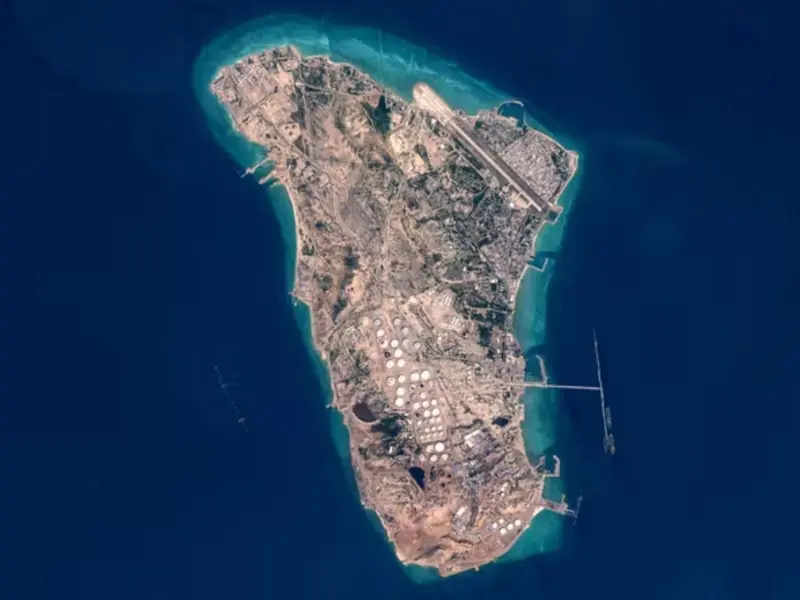
Amid rising geopolitical tensions, reports suggest that Iran is preparing for a potential threat involving Kharg Island, while US officials are reportedly considering whether ground forces could be deployed in the region. According to Reuters, the Trump administration is evaluating military options, including the possible deployment of Marine contingents near the area by the end of the month, with additional airborne forces being positioned to expand operational flexibility.
Earlier, US forces carried out strikes in mid-March on targets linked to Kharg Island, after which Donald Trump claimed that key military assets were “totally obliterated.” He also indicated that Iran’s oil infrastructure—previously left untouched—could be considered in future actions.
Kharg Island holds strategic importance for Iran, as it is responsible for handling nearly 90% of the country’s oil exports. Located in deep waters suitable for large tankers, the island plays a crucial role in Iran’s energy trade. Any disruption to its operations, especially amid instability in the Strait of Hormuz, could severely impact global oil supply chains and significantly pressure Iran’s economy.
However, analysts warn that a potential seizure of Kharg Island would not be a straightforward victory for the US. While it could be achieved relatively quickly, it may also expose American troops to prolonged conflict, missile attacks, and drone warfare, potentially escalating rather than ending the confrontation.
Experts from the Foundation for Defense of Democracies, Ryan Brobst and Cameron McMillan, noted that occupying the island is more likely to extend the conflict than deliver a decisive outcome, citing risks from advanced drone warfare and sustained military resistance.
Former US Central Command commander Joseph Votel also highlighted that even a small deployment of around 800 to 1,000 troops would require extensive logistical support and protection.
Ultimately, while control of Kharg Island could give the US leverage over Iran’s oil exports and potentially pressure the Strait of Hormuz, it could also trigger wider regional instability, increased maritime risks, and a deeper, more prolonged conflict.
Recent Random Post: