








+-+www.TodaysWorld.in+(2).jpg)
Cast: Sharvanand, Priya Anand, Srihari and others
Editing: Marthand .K.Venkatesh
Cinematography: Erukulla Rakesh & Naveen Yadav
Music: Shakti Kanth
Producer: Sharvanand
Written & Directed by: Anish Yohan Kuruvilla
CBFC Rating: ‘A’
Release Date: 28-12-2012
Story: Vamsi(Sharvanand) is an orphan and grows up as a thief. Vamsi meets Maaya Master(Srihari) in a jail. Vamsi falls in love with Satya(Priya Anand) a classical dance teacher, who teaches to kids and is more interested in playing public awareness dramas in rural areas. Vamsi wants to leave the profession and live happily with Satya. but destiny has other ideas for him and he becomes a part of a robbery. What happens after that is what the movie is about?
Performances: Sharvanand has come up with yet another wonderful performance. He is natural in almost all the scenes be it a romantic number or talkie part. Priya Anand is good. Srihari once again comes up with decent performance needed by the director. The remaining cast are mostly new comers. The plot of the film is good but there are plenty of loop holes in the way it’s narrated. The first half is completely scattered. The second half is better in terms of focus. Art work and Editing are good. Screenplay is weak. The Direction is good in few places.
Analysis: Anish Kuruvilla who earlier directed Avakai Biryani(2008) directed this flick. Sharvanand produced himself under “Sarvaa Arts” banner. Sharvanand and the team raised expectations with the Music, Promos and the publicity much before the movie’s release. The Movie received an ‘A’ certificate for the Violence and Coarse language used.
Sharvanand once again impresses us with his subtle yet strong performance. The romantic thread suited to him aptly as if subtle love tracks are meant for him only. Priya Anand is good. She performed well. She looked cute and homely in those cotton Punjabi suits and Sarees. Srihari is realistic, he just behaved like a thief who lives in the slum and does anything for money. The supporting artists are mostly new and looked raw.
The comedy track(drama) in the flashback episodes is boring and tests your patience. This the worst comedy thread of recent times which failed utterly in evoking laughs and is bit irritating at times. The Dialogues are okay in few places(most of the dialogues are muted which has filthy language). The Music is okay with a couple of slow numbers and the Background score(Ko ante Koti theme) was good but the rest of the BGM is loud and the re-recording overlapped the dialogues at times.
The Director and his team experimented with new screenplay very much similar to Bollywood realistic raw movies(directed by Anurag Kasyap, Vishal Baradwaj). The Director lost grip over the scenes in the first half and concentrated more on the behavior of the characters. Realistic movie directors like Anurag and vishal purely concentrate on the backdrop and nativity of the people and then place the character in extreme circumstances and take out the output. The back robbery was also not up to the mark. Some scenes reminded of Hindi flick Johnny Gaddar (Neil Nitin Mukesh).The director failed in making it a thrilling experience. The introduction of the Characters through Sharvanad’s voice over was good experiment.
The repeated glimpses of the flash back(black & White) love story of the hero is shown ‘n’ number of times for every 15 minutes which is boring. The whole first half- an- hour time is taken to introduce the characters. The movie slows down once the love story begins. The firts half lacks clarity. The second half is better when compared to the first one. The gang(friends) of the robbery team failed in elevating the emotional content and touch the Audience in the second half. Art work is impressive with mostly realistic locations and feel. Cinematography is okay. The songs are well shot. Editing is good. The production values are okay.
The Director and Producer(Sharvanand) should be commended for coming up with an experimental non routine flick but could have tasted success if executed well. We have to wait and watch how the Multiplex(Target) Audience receive this experiment as this movie is not for the masses.
Plus: Sharvanand, Srihari
Minus: Screenplay and Narration
Verdict:Movie disappoints due to bad execution. Keep away if you are looking for a regular commercial flick
Recent Random Post:
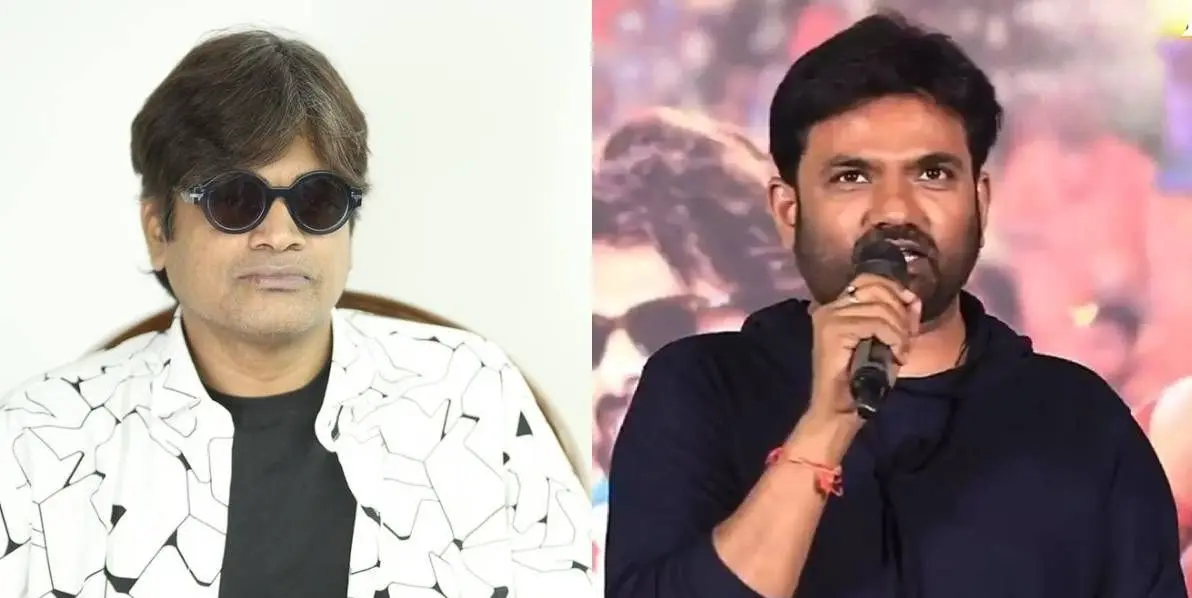
Maruthi vs Harish Shankar: Contrasting Reactions to Box Office Flops
Telugu cinema has long been known for producing some of the most talented directors in the Indian film industry. However, it also has its share of filmmakers who occasionally appear disconnected from audience expectations, facing criticism when their films fail to resonate.
A recent comparison between directors Maruthi and Harish Shankar has sparked discussion about how filmmakers respond to box office setbacks. Both entered the year with strong expectations surrounding their respective films The Raja Saab and Ustaad Bhagat Singh, which were promoted as mass entertainers aimed at reviving the vintage appeal of stars Prabhas and Pawan Kalyan.
Despite the hype, the audience response fell short of expectations, and both films struggled to perform at the box office. What has drawn attention is not just the failure itself, but the contrasting ways the two directors handled it afterward.
Maruthi appears to have taken a quieter approach, acknowledging the setback indirectly and maintaining a low profile in public discussions. His silence is being interpreted as acceptance of the audience verdict and a focus on moving ahead without extending the debate.
In contrast, Harish Shankar has continued to strongly defend his work, maintaining that Ustaad Bhagat Singh stands among his best films, despite widespread criticism. This firm stance has created a visible gap between audience perception and the filmmaker’s narrative.
The situation highlights an important industry reality—while creative conviction is essential, aligning with audience sentiment plays a crucial role in sustaining long-term credibility. In many cases, accepting failure gracefully may help preserve reputation more effectively than resisting public opinion.