









The debate around the propagation — and perceived imposition — of the Hindi language continues to stir political discourse in South India. The latest round was sparked when Andhra Pradesh Deputy Chief Minister Pawan Kalyan initiated a conversation endorsing Hindi as a tool for enhancing knowledge. His stance was backed by Nara Lokesh, who echoed similar views on the language’s potential.
Even Andhra Pradesh Chief Minister Jagan Mohan Reddy entered the discussion, stating that Hindi is the national language of India, further consolidating the pro-Hindi sentiment among AP’s political leadership.
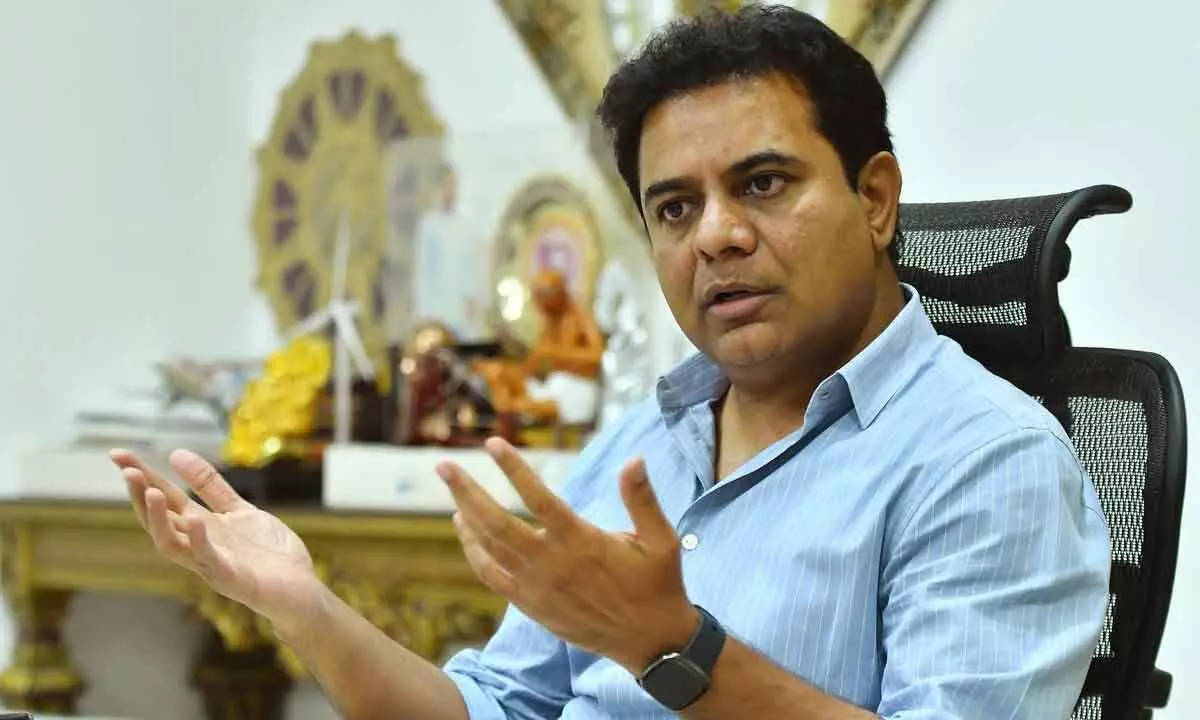
However, this narrative was sharply countered by KTR, BRS president and former IT Minister, who offered a clear and contrasting opinion. KTR firmly rejected the notion that Hindi is — or should be — considered India’s national language. He described the ongoing promotion of Hindi across non-Hindi-speaking regions, especially the South, as intrusive and unwelcome.
Clarifying his stand, KTR remarked, “I have nothing against Hindi. But India is a land of many languages, all with rich heritage and cultural significance. Why do we even need a national language? We aren’t forcing Telugu on others, so why should Hindi be imposed on us?” He further questioned the unequal government spending, pointing out that while Hindi receives a ₹50 crore budget for promotion, languages like Telugu, Tamil, and Malayalam don’t get equivalent support.
While Andhra leaders seem united in their endorsement of Hindi as a national medium, KTR’s response stands out for its assertiveness and perspective. His comments have reignited the conversation around linguistic diversity and the idea of cultural imposition versus inclusivity in a multi-lingual nation like India.
Recent Random Post:
Markapuram Bus Incident: బయట రాష్ట్రాల నుంచి పాత బస్సులను తీసుకొచ్చి మరమత్తులు చేసి..
Markapuram Bus Incident: బయట రాష్ట్రాల నుంచి పాత బస్సులను తీసుకొచ్చి మరమత్తులు చేసి..