








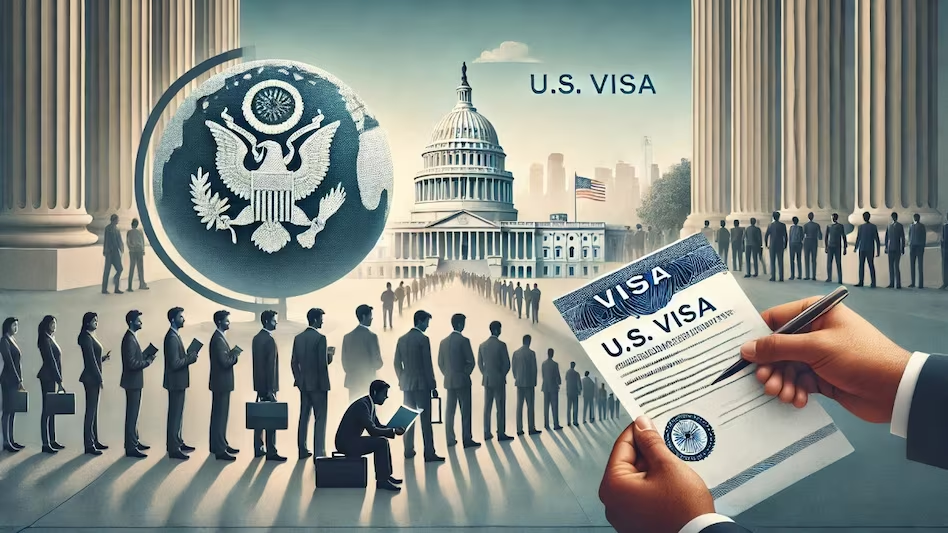
The recent crackdown by the Trump administration on international students involved in last year’s pro-Palestinian campus protests has created widespread concern within the student community. Federal immigration authorities have already arrested two foreign nationals, one of whom was a student protester at Columbia University, while another left the country following the revocation of her visa. These developments highlight the increasing legal risks international students face in the United States.
Understanding the Risks
International students must be aware of the circumstances that can lead to deportation, including overstaying their visa, violating its terms, or committing a crime. The U.S. Immigration and Customs Enforcement (ICE) has the authority to deport individuals for serious criminal offenses, particularly those carrying potential jail sentences of more than one year. Minor infractions, such as traffic violations or first-time shoplifting, typically do not lead to deportation.
Maintaining visa status is essential. Students on F-1 and M-1 visas are required to leave the U.S. within 60 and 30 days, respectively, after completing their academic programs. Failure to do so results in “unlawful presence,” which can trigger bans on future re-entry.
Heightened Scrutiny on Student Protests
The Trump administration has significantly increased its scrutiny of visa holders participating in political demonstrations. U.S. Secretary of State Marco Rubio has publicly defended the policy, stating on social media:
“When you apply to enter the United States and you get a visa, you are a guest… If you tell us when you apply for a visa ‘I’m coming to the U.S. to participate in pro-Hamas events,’ that runs counter to the foreign policy interest of the United States.”
Rubio has also criticized academic institutions, such as the Massachusetts Institute of Technology (MIT), for not suspending foreign students involved in anti-Israel protests, signaling increased governmental oversight of student activism.
What International Students Should Do
Given the administration’s swift actions on visa revocations and deportations, international students should take proactive steps to safeguard their legal standing in the U.S.:
Know Your Visa Conditions – Stay informed about the terms of your visa and avoid any actions that might be interpreted as violations.
Seek Legal Counsel – If faced with potential visa issues, consult an immigration attorney for guidance on maintaining status and navigating legal challenges.
Exercise Caution in Political Activities – While students have free speech rights, involvement in protests perceived as counter to U.S. foreign policy could invite scrutiny and potential immigration consequences.
Stay Updated on Policy Changes – Immigration policies can shift rapidly; staying informed helps students make informed decisions about their stay in the U.S.
With the government’s intensified focus on visa holders’ activities, international students must remain vigilant to protect their educational and professional opportunities in the U.S. Ensuring compliance with immigration laws and understanding their legal rights will be crucial in the current political climate.
Recent Random Post: