


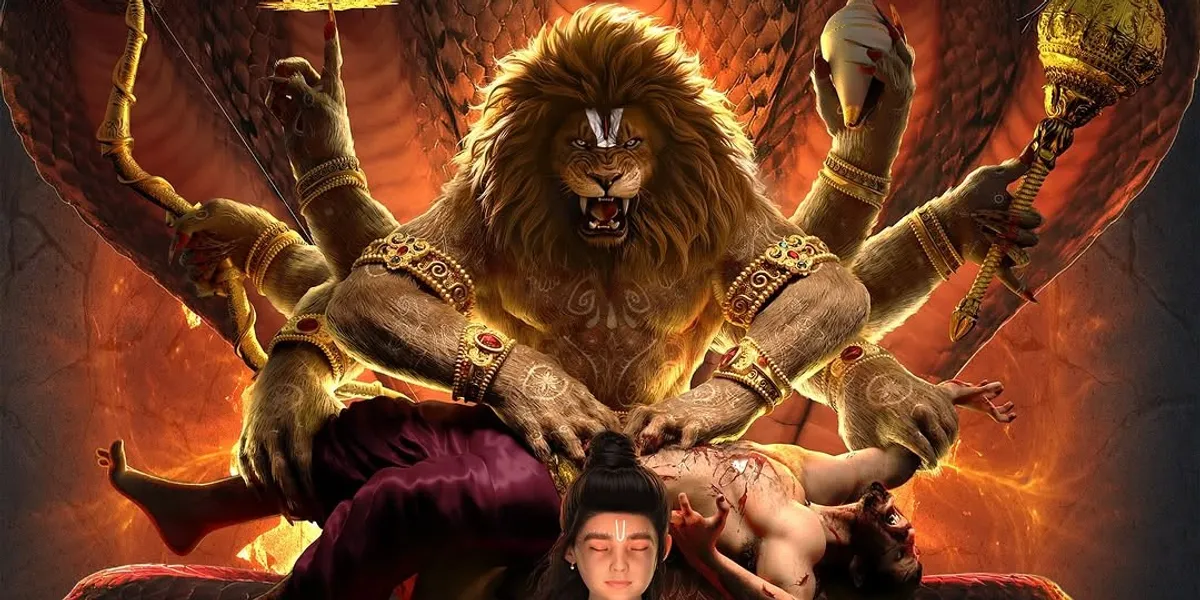
The mythological animated feature Mahavatar Narasimha has turned out to be a surprise blockbuster at the box office. Made on a modest budget of ₹6 crore, the film has already raked in over ₹30 crore in just five days. With strong word of mouth and growing family and children audiences, its collections are expected to rise further in the coming weeks.
Indian filmmakers have long underestimated the potential of animated cinema. While there have been a few notable attempts in the past, the industry never managed to deliver animated features consistently on the scale of Hollywood or Japan. Producers have often assumed there is no viable market for animated films in India. However, the resounding success of Mahavatar Narasimha has shattered that notion and may well mark the beginning of a new chapter for animation in Indian cinema.
Globally, animated films dominate box office charts. Some of the biggest Hollywood blockbusters belong to animation studios like Disney and Pixar. In fact, two of the top-grossing English films this year are A Minecraft Movie and Lilo & Stitch. China’s Ne Zha 2 became the highest-grossing film of all time in its market, while most of the top Japanese films in history are animated features. Many of these films already have a solid fan base in India, proving that the audience for animation exists—it just hasn’t been tapped properly.
The team behind Mahavatar Narasimha, Hombale Films, has already announced a 10-year plan for this franchise, with upcoming animated features focusing on the ten incarnations (Dasavataras) of Vishnu. If more filmmakers take inspiration and create animated films based on Indian mythology, folklore, and cultural stories, India has the potential to become one of the largest animation film industries in the world.
Mahavatar Narasimha has taken the first big step. Now, all eyes are on how this success will shape the future of Indian animated cinema.
Recent Random Post:
Andhra Pradesh | ఏపీలో ‘క్యాపిటల్ లాక్’.. వెరీ ఇంట్రస్టింగ్..
Andhra Pradesh | ఏపీలో ‘క్యాపిటల్ లాక్’.. వెరీ ఇంట్రస్టింగ్..