









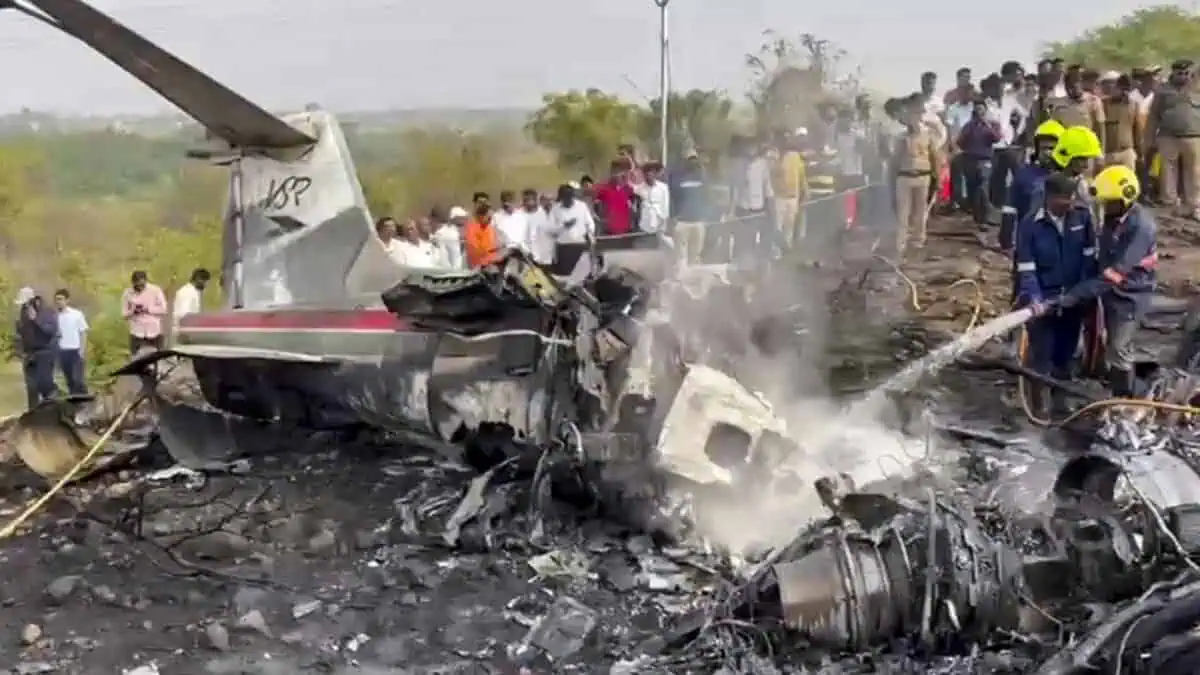
According to preliminary information, the tragic aircraft crash near Baramati was not caused by a single failure. Instead, it appears to have resulted from multiple risk factors coming together at the same time. Adverse weather conditions, runway limitations, and operational challenges collectively formed a fatal chain of events that led to the accident.
Dense fog covered the Pune–Baramati region at the time, reducing visibility to extremely low levels and making approach and landing highly risky. Adding to the challenge, the Baramati airstrip does not have an Instrument Landing System (ILS), which is crucial for safe landings during poor visibility. Due to the absence of ILS, the pilot had to rely entirely on manual control and visual judgment.
Reports indicate that the first landing attempt was aborted, with the aircraft making a wide corrective turn after failing to align properly with the runway. Despite the continued poor visibility, a second landing attempt was made, during which the aircraft eventually crashed.
Early assessments suggest that the accident was not triggered by a single technical issue, but by a combination of unfavorable weather, limited runway infrastructure, and the operational difficulties faced during landing. Further investigation is expected to provide a clearer picture of the sequence of events that led to the tragedy.
Recent Random Post: