








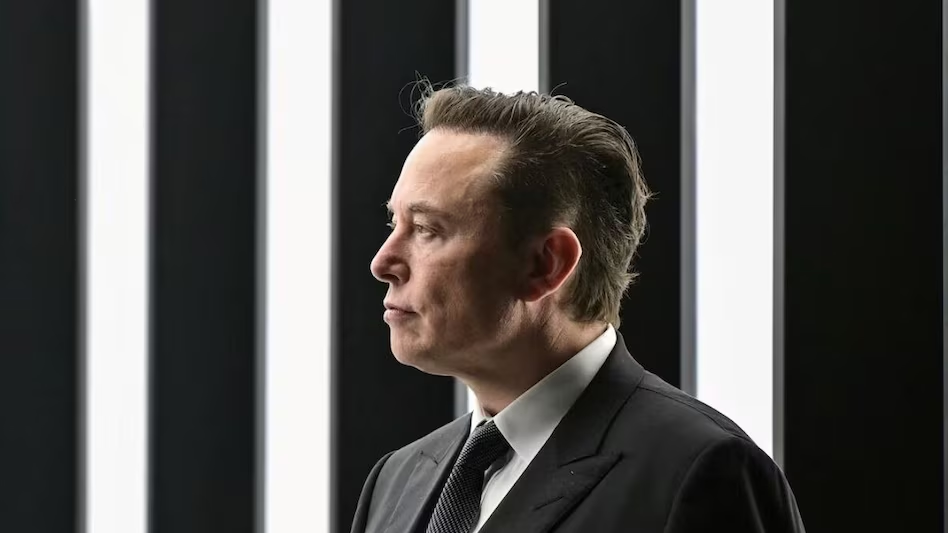
Elon Musk has reignited the national debate over America’s labour shortages, particularly in physically demanding sectors, after asserting that the US no longer has enough people willing or able to take up such jobs. His comment, made during an online discussion about workforce gaps, quickly drew political and public backlash.
The debate intensified following Ford CEO Jim Farley’s revelation that the company is struggling to fill 5,000 mechanic positions offering salaries of $120,000 annually. The disclosure has fed into wider concerns voiced by industry leaders who say Americans increasingly “lack several skills” required across core industries.
Trump Reaffirms Support for H-1B Amid Worker Raids
Adding fuel to the controversy, President Donald Trump said in a FOX News interview that the US “will not terminate” the H-1B programme, arguing that the country continues to rely on foreign talent. He cited recent raids involving South Korean battery workers as evidence of ongoing skill shortages, stressing that these roles “require expertise currently lacking among American workers.”
Despite imposing a $100,000 fee on companies hiring foreign workers through H-1B, the administration appears unlikely to phase out the programme due to Silicon Valley’s continued dependence on specialised STEM talent. The mixed messaging has left businesses and workers questioning the government’s long-term plan.
Musk’s Comment Sparks Online Pushback
Responding to Farley’s concerns, Musk wrote on X: “America has a major shortage of people who can do challenging physical work or who even wish to train to do so.” His post drew heavy criticism, with many accusing him of echoing corporate narratives that misrepresent the realities faced by American workers.
One user countered Musk’s claim with a personal account: “You’re wrong. My white 22-yr-old son has been begging for this kind of work for the past 6 months… He is about to finish trade school… Can’t even get an interview with Walmart.”
Another user argued that the issue is not a shortage of American workers, but suppressed wages and diminishing employer loyalty: “We can’t find American workers to do challenging physical work at suppressed wages, therefore we must import cheap foreign labour with no exit options or bargaining power.”
As industry leaders, policymakers, and the public clash over the root causes of the labour gaps, the debate over the future of H-1B and American workforce development continues to intensify.
Recent Random Post: