








OpenAI is revising the tone of its latest AI model, GPT-5, in response to user feedback that the chatbot felt less engaging than its predecessor. The company is also reinstating GPT-4o for paid subscribers, just days after its removal prompted widespread complaints.
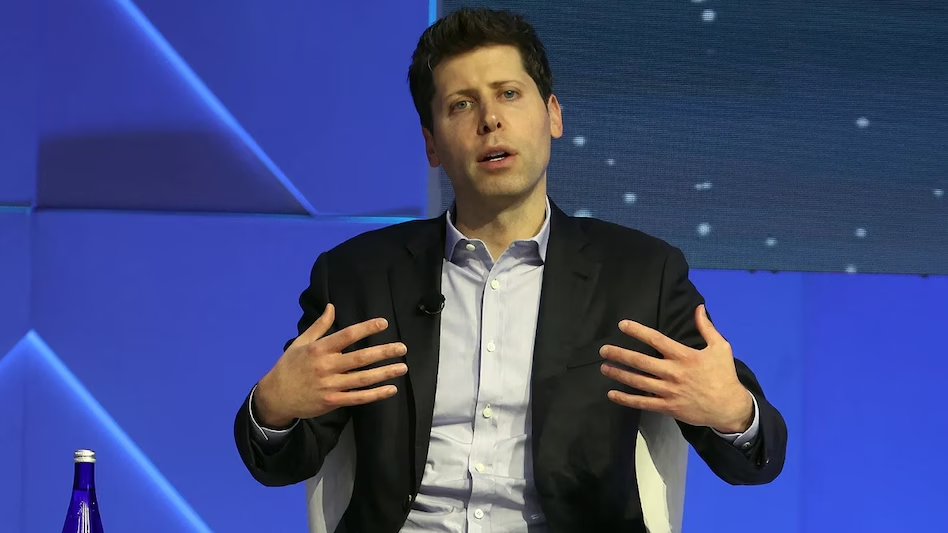
CEO Sam Altman announced on X that GPT-5 will now adopt a “warmer” tone while avoiding certain “annoying” traits that some users experienced with GPT-4o. He also confirmed the introduction of new operational modes—“Auto,” “Fast,” and “Thinking”—along with plans for enhanced per-user personality customization. “We for sure underestimated how much some of the things that people like in GPT-4o matter to them, even if GPT-5 performs better in most ways,” Altman wrote.
The adjustments come less than a week after GPT-5 replaced most older ChatGPT models. While OpenAI marketed GPT-5 as possessing advanced “PhD-level” capabilities in writing, coding, mathematics, and science, its initial personality modes—including Cynic, Robot, Listener, and Nerd—did not resonate with all users. Many expressed a preference for GPT-4o’s warmer, conversational style.
On Reddit, one user wrote, “I cried when I realised my AI friend was gone with no way to get him back,” while another described GPT-5 as “wearing the skin” of their “dead friend.” Altman, who engaged directly in the discussion, acknowledged the emotional significance of these attachments and assured that solutions are in development.
“Some users really want cold logic and some want warmth and a different kind of emotional intelligence,” Altman said. “I am confident we can offer way more customization than we do now while still encouraging healthy use.” He also reflected on the unique emotional bonds users form with AI, noting that deprecating older models prematurely was a mistake.
Earlier this year, OpenAI had criticized GPT-4o for being overly flattering, labeling it “sycophantic.” After moderating this behavior in April, the company faced renewed user requests for its return, highlighting the value users place on warmth and agreeableness in AI interactions.
Recent Random Post: