









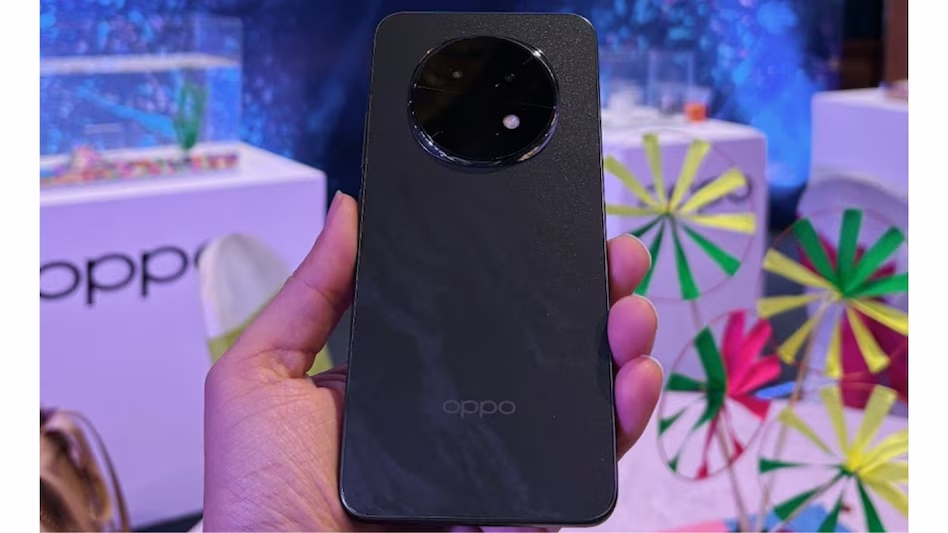
Oppo’s new F29 Pro enters the mid-range smartphone market with a unique selling point—durability. Boasting an IP69 rating, Military Standard (MIL-STD) certifications, and Gorilla Glass Victus 2, this device is designed to withstand extreme conditions. However, beyond its toughness, does it offer enough to outshine competitors like the Realme P3 Pro and iQOO Neo 10R? After using the Oppo F29 Pro for a few weeks, here’s what I found.
The design of the Oppo F29 Pro leans toward practicality rather than aesthetics. The Granite Black finish is understated but elegant, complemented by a silver-plastic frame. Its large, round camera module draws attention but lacks innovation in terms of design. What truly sets it apart is the solid build quality, making it resilient against everyday spills like soft drinks, coffee, and even beer—ideal for users with an active lifestyle. Despite its rugged nature, the phone remains lightweight at 180 grams, with quad-curved edges providing a comfortable grip for extended use.
The 6.7-inch FHD+ quad-curved AMOLED display is vibrant and capable of reaching 1200 nits peak brightness, ensuring good visibility even in outdoor conditions. Colors are vivid, and content consumption is enjoyable. However, sharpness occasionally suffers, slightly affecting overall clarity, especially when compared to rivals offering crisper displays.
Performance-wise, the MediaTek Dimensity 7300 Energy chipset powers the F29 Pro, which lags behind similarly priced alternatives in benchmark tests. On AnTuTu, it scored 7,02,639, positioning it below competing models. That said, day-to-day tasks like browsing, streaming, and social media usage run smoothly. Gaming performance remains stable at 60fps, but pushing it to HDR graphics settings leads to noticeable lag and heat buildup during extended sessions.
Running on ColorOS 15 (based on Android 15), the phone guarantees two years of software updates and three years of security patches—acceptable but behind some competitors offering longer support. Unfortunately, ColorOS retains its pre-installed bloatware, cluttering the UI and slightly hampering the experience. While most unwanted apps can be removed, it feels unnecessary in 2025. Oppo has also included AI-driven features like AI Unblur, AI Eraser, and Gemini AI, which enhance usability.
The camera setup is a surprising letdown, as Oppo has skipped an ultra-wide lens, equipping the device with just a 50MP primary sensor and a 2MP monochrome lens. In good lighting, photos are decent but lack the detailed sharpness and accurate color reproduction expected at this price point. In low-light conditions, image quality further declines, with visible grain, weak color management, and insufficient clarity. Portrait shots offer better edge detection, though Oppo’s software tends to apply excessive smoothing. The 16MP selfie camera delivers natural and usable images but lacks the sharpness and vibrancy found in competing devices.
Overall, while the Oppo F29 Pro stands out with unmatched durability, its display sharpness, processing power, and camera setup leave room for improvement in a highly competitive segment.
Recent Random Post: