



watch Dabangg3: Badass Dialogue Contest | Salman Khan | Sonakshi Sinha | Prabhu Deva | 20th Dec’19
Director Teja Focusing On ‘Article 370’ Now?
 Many thought that acclaimed filmmaker Teja is back on track after he delivered Nene Raju Nene Mantri that has lovely political drama narrated from the point of view of a man who loves his wife more than anything. But then, he made ‘Sita’ with Kajal Aggarwal and the fame has gone backwards many yards.
Teja is once again trying to find his groove as he embarked on a journey to find out an innovative story from some time. But then, someone gave him the idea of making a film on abrogation of Article 370 in connection with Jammu and Kashmir. Since then, he’s said to be working a lot to find more about the article and doing extensive research to do a film on that law and the abolition day.
Naturally, for non-Hindi speaking south Indians who are far from Kashmir, it is tough to understand the social-cultural situations in J&K and make a film that could make real sense. But then, Teja is said to be daring to make a movie on Article 370 in both Telugu and Hindi as a bilingual.
Frankly speaking, Teja never handled such big political dramas and perhaps that is the reason he walked out of NTR biopic. So, will he surely make a movie on Article 370 is something we must see.
Samantha Is Not a Hero, but Dangerous Villain
 After wrapping ’96’ movie Telugu remake recently, heroine Samantha is solely focusing on joining the sets of her first web venture, The Family Man 2. Apparently she is joining the likes of Manoj Bhajpayee and other able actors in this Amazon Prime web series. Here’s an interesting snippet about it.
Ready for bold and adventurous roles, many thought that Samantha will be joining the Season 2 of The Family Man as an Indian agent who works for the country. As she practised lots of parkour and high-intensity weight training, it was felt that she will do some high octane chase sequences as well. Though she will all that, it will not be from a patriotic angle, they say.
Rumours are coming up that actually Samantha is playing the role of a terrorist in the second season of this superhit web series. She will be seen as a dangerous religious extremist who acts ruthless and gets ready to create ruckus and rampage across India.
In case if this is true, this will be Samantha’s second negative role after she did one in Vikram’s 10 Enradukulla. Let’s see what happens.
Now, Karthi is Jyothika’s ‘Thambi’

Though the hero hasn’t let them down, Mega fans are a bit startled to come to know another crazy mega movie’s title is being grabbed now. And here goes an interesting snippet.
Apparently Tamil hero Karthi took the title ‘Khaidi’ in Telugu version as well and scored a commendable success at the box office. For its riveting narrative, the film got huge applause and attention. Unlike Nani who has failed to utilise a powerful title like Gang Leader, which is from a game-changing film for Megastar Chiru, Karthi made a mark with Khaidi.
After grabbing Chiru’s title, he is now set to take up Pawan Kalyan’s title too. Other day it was announced that Karthi’s next film which also features Jyothika in a crucial role as his sister is titled ‘Thambi’ in Tamil. That is obvious that the film will go for the title ‘Tammudu’ in Telugu as the title is an aptest one for this Jeetu Joseph (Drushyam fame) directorial.
With mega heroes not using the titles of super hit mega films, surely other actors are cashing on that, say fans.
pHOTo Alert: Girl Next Door Turn On The Heat
 Ruhani Sharma who was seen as a girl next door in her debut film Chi La Sow is looking to shun that image with her social media posts.
She has been posting pictures of her clad in revealing costumes and turning the heat on.
Ruhani’s active Insta timeline paid off as she bagged the female lead in Nani’s second production titled Hit.
She will be romancing Falaknuma Das fame Vishwak Sen in it.
We are yet to know if Ruhani gets to sizzle on screen in this style in Hit or would it be an extension to her Chila La Sow image.
No Action Stunts in Prabhas’s Next!
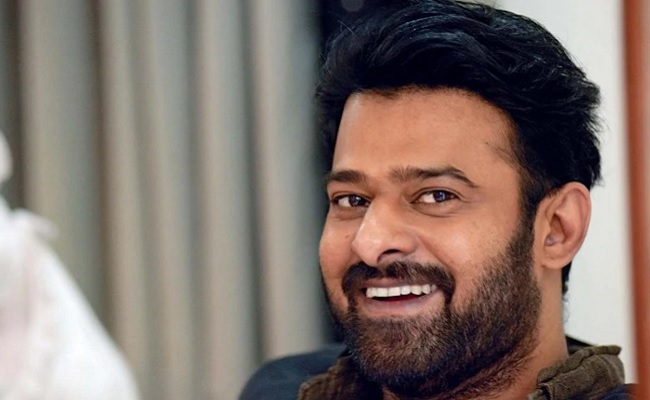 Prabhas is all set to resume the shoot of the pending project. Prabhas wrapped up a month-long shoot schedule of “Jaan” (tentative title) last year and then stopped its shoot to concentrate on “Saaho”.
He is now resuming the film after director Radhakrishna Kumar incorporating many changes.
As we reported earlier, the film’s script has been tweaked. The action stunts have been reduced. There will be minimal action. The romantic part will be given more importance.
Prabhas feels his fans need some variety offer from his as they have seen heavy-duty action in ‘Saaho’ and visual spectacle in ‘Baahubali’ movies.
He will present himself as ‘darling’, a romantic hero.
This film is expected to resume shooting next week in Hyderabad where a special set has been created. Pooja Hegde has been paired up with Prabhas.
Amit Trivedi of ‘Sye Raa’ fame is scoring the music. UV Creations and Gopkrishna Movies are jointly producing it.
There are reports that the film will not have the Hindi dubbed version. But they are baseless rumors.
Prabhas has a huge market for his movies in the Hindi market and he will try to strengthen it further. The film will also be dubbed into Hindi and will have a simultaneous release.
Sree Vishnu to Focus on Next Three Movies
 Soon after ‘Brochevarevurara’ becoming a sleeper hit, Sree Vishnu has signed three films. All of them had different concepts, fresh ideas.
All these three films were announced officially but they are yet to hit the floors. He wanted to take a final call after seeing the result of “Thipparaa Meesam”.
Now that the film has flopped miserably, Sree Vishnu has realized that he needs to stick to his core base. He will not do negative roles henceforth.
He will streamline the three movies that he has singed, which should go first and which the next.
Sree Vishnu has carved out a niche for himself with concept-based movies like ‘Brochevarevurara’.
Ram temple provides substratum to India’s identity
 The judicial resolution of the 70-year-old Ayodhya dispute has mitigated the most inflammatory cause of Hindu-Muslim divide in India and given relief to the average citizens engaged in pursuing their livelihood in peace.
The unanimous verdict of the Supreme Court’s five-member Constitutional Bench recognising the spot under the central dome of the demolished Babri Masjid at Ayodhya as the birth place of Lord Ram for worship and giving the title of the entire disputed land of 2.77 acres to the Hindu side is a transformative development that yields a significant end result of the long search for validation of what is a major determinant of India’s national profile.
The judgement rests on points of both law and fact but the apex court also invoked Article 142 of the Constitution to give a verdict of arbitration on two points- accommodation of Nirmohi Akhara in the Trust that would oversee the construction of a Ram Temple at the site and award of five acres of land by the government at a suitable place in Ayodhya to Muslims for building a mosque in lieu of their lost claim.
Both Prime Minister Narendra Modi and RSS chief Mohan Bhagwat had called for restraint on the part of those who considered the verdict as their victory.
While many Muslim leaders grudgingly accepted the judicial pronouncement, the All India Muslim Personal Law Board kept the option of a Review Petition open, claiming that the verdict was flawed.
The main opposition, Congress, attempted to derive political mileage from the development by insinuating that the BJP will no longer be able to exploit the issue on communal line for electoral gain. It thus tried to keep itself on the right side of Muslims while going along with the judgement.
The overriding impact of a huge problem of national import being resolved through a credible judicial process has apparently injected political sanity in the responses to the judgement received so far. The democratic texture of Indian state remains intact and this is an invaluable gain.
It was clear before the verdict came that only one side would feel vindicated leaving the other with a sense of loss. There are three substantive elements in the judgement however, that would give the Muslim contestants the consolation of having been dealt an even hand.
First, the highest court of the land clearly pronounced that the Babri Masjid demolition was a violation of law since the entire structure of the mosque was brought down in a ‘calculated’ act of destroying a place of public worship.
Second, the judgement has after an extensive examination of the facts of the case recorded upfront that “the evidence… in respect of the possessory claim of the Hindus to the composite whole of the disputed property stands on a better footing than the evidence adduced by the Muslims”.
The Court held that “the existence of an Islamic structure at a place considered sacrosanct by the Hindus did not stop them from continuing their worship at the disputed site.. within the precincts of the structure” as this “did not shake the faith and belief of Hindus that Lord Ram was born” there.
It further concluded that according to ASI finding “the 16th Century mosque of Mughal Emperor Babar was not built on vacant land”.
The judgement used the words “faith” and “belief” here only to establish the fact of continuity of worship by Hindus inside the Babri Masjid.
The apex court pronounced that the three way bifurcation of the disputed land by the High Court was neither legally sustainable nor feasible in terms of sub serving the interest of either of the parties.
And lastly, the Supreme Court felt the Muslims had been wrongly deprived of a structure, even if its exclusive use by them as a mosque was not established, through means which should not have been deployed in a secular nation committed to the rule of law.
Taking note of the entitlement of the Muslims, the Court pronounced that a five acre plot at an alternative site in Ayodhya will be allocated for the building of a mosque. This is not a gift of charity as made out by some Muslim critics of the judgement but a judicial recognition of the claim of the Muslim side.
It is extremely significant that the Supreme Court prefaced its judgement with the observation that “this Court is tasked with the resolution of a dispute whose origins are as old as the idea of India itself”.
As the world’s largest practising democracy India was being “secular” in terms of showing respect to all faiths and making no distinction of caste, creed and region amongst citizens in matters of providing development and protection of law.
It was however, always clear that India’s civilisational legacy that made it an entity of its own was older than what the Prophetic religions had brought to the world just over two thousand years ago and that the great mix of colour they all provided to this land had to be kept from creeping into our electoral politics and corrupting the democratic system of equality for all.
Minority politics threw up a conflict-ridden domestic scene here as faith-based vote banks were sought to be preserved by their protagonists through a needless denial of the reality that India demographically was a Hindu majority country.
So long as the elections were fought here on the ultimate principle of “one man one vote” – the very basis of democracy – and the elected political executive governing the nation did not carry any denominational stamp, it would be ensured that the citizens had the freedom of religion and the right to pursue socio-cultural traditions provided they did not create disharmony and that political governance could remain above religion.
India’s contemporary status as a democratic nation could therefore exist in consonance with and not in disregard of its Hindu inheritance. The Ayodhya verdict has given clarity to this idea of India.
The Modi government has to be given credit for patiently taking the path of Judiciary for getting the Ayodhya conundrum resolved in the face of mounting pressure from Hindu groups for facilitating early construction of Ram Temple through other methods. That the temple project will be overseen and monitored by the Government takes the communal sting out of it to an extent.
The Ayodhya conflict was creating a vertical divide in the country, between its two largest communities, and election politics based on communal identity was clouding the historical reality that India could live on as a Hindu majority nation offering a socio-cultural spectrum of its own but treating all its citizens equally at the political level.
In a democracy, a citizen lives in three dimensions- ‘personal’ that gave the choice of faith, ‘social’ that provided cultural freedom and ‘political’ that guaranteed the right to chose his or her representative in an election.
Many parties have played minority politics for gaining power and done so in a manner that deprecated nationalism and progressively put such matters as respecting National Flag and National Anthem into question.
The communities were pushed towards religious fundamentalism in the process creating a possibility that an adversary next door would be tempted to exploit the scene.
India should ideally move towards a situation where Muslims will figure amongst the political leaders of Hindus and vice versa.
Why should the communities be led by people of their own denomination in a democratic state? The Ram Mandir resolution should help India to reinvent its nationhood by creating a new sense of unity. As Prime Minister Modi rightly said “fear, bitterness and negativity have no place in new India”.
The state would at the same time be well advised to prevent any mischief that could be created by trouble makers within or by those guided from outside of our borders, in the aftermath of the Supreme Court verdict.
Allari Naresh Experiments With Vijay
 Last seen in Mahesh Babu’s Maharshi in a prominent role, Allari Naresh has been listening to various stories of late to sign his next.
After tasting bitter results with regular comedy entertainers, he has changed his mind to do content-driven films.
It seems he is finally convinced with a script. Allari Naresh is introducing Harish Shankar’s protégé Vijay Kanakamedala as director with his next film.
This soon-to-be launched film is billed to be a concept based one.
Satish Vegesna is turning full time producer with the untitled film. Other details will be unveiled soon.
Allari Naresh will next be seen in Bangaru Bullodu.
Work Begins for Rana’s Hiranya Kashyapa
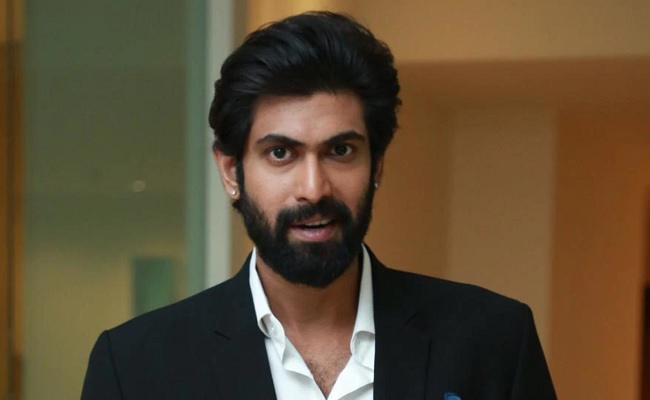 Putting an end to all the speculations about his mythological movie “Hiranya Kashyapa”, actor Rana Daggubati is working on the project.
Director Gunasekhar has already begun creating huge sets of the movie in Ramanaidu Studios.
Gunasekhar has hired old technicians who used to create studio props for mythological movies to bring authenticity.
The pre-production work has begun after Rana has given his consent.
The film was to go to the sets long back but producer Suresh Babu stopped the works of “Hiranya Kashyapa” when his son Rana was diagnosed with a kidney ailment. Now that Rana is cured, the project has been revived.
Ramanaidu Studios is bustling with the activity of this mythological drama that will be made on more than Rs 200 Cr budget in Telugu, Tamil, and Hindi languages.
A Hollywood visual effects company will work on the graphical work. Rana will take care of VFX and post-production work, while Gunasekhar will work on his direction and the sets.
Rana will move on to his project after wrapping up Venu Udugula’s “Virata Parvam”.
Rana will start shooting for this movie from the first week of December.
Geetha Govindam Director Terrorizing Producers!
 Director Parasuram has scored huge blockbuster with Geetha Govindam and has been ever since waiting for another opportunity.
He is looking to make his next film with a big star, but none of the superstars that he met are willing to team up with him at this point.
Parasuram is committed to do his next film for GA2 Pictures and has taken advances from nearly half a dozen producers.
He hasn’t have any confirmed project in the pipeline, but he is demanding for Rs. 10 crore as his remuneration.
Recently, a new producer has reportedly met him and expressed his wish to make a movie with him. Parasuram accepted to do the film, but demanded Rs. 10 Crore as remuneration.
The producer is yet to have another meeting with the director. Parasuram used to be a small time filmmaker until Geetha Govindam happened in which he got a profit share as his remuneration.
He took home nearly Rs. 9 crore for Geetha Govindam and it looks like the director is now expecting similar pay check for every film.
We don’t know if this has any role in Parasuram’s long wait for another film.