








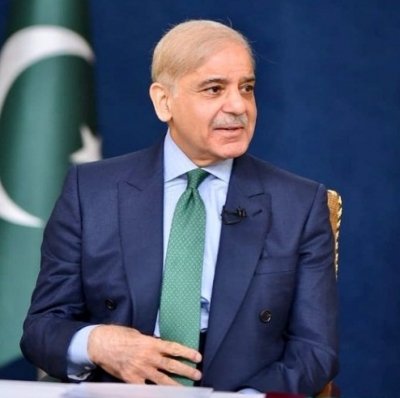
Islamabad, March 22 (IANS) – The government of Prime Minister Shehbaz Sharif has approved a significant 188% increase in the salaries of cabinet ministers, ministers of state, and advisors, contradicting its earlier pledges of austerity and expenditure reduction. The decision comes at a time when Pakistan is grappling with a severe financial crisis, characterized by high taxation, job losses, inflation, and escalating fuel and electricity costs.
Under the revised structure, ministers and advisors will now receive a monthly salary of Rs 519,000. This development has sparked widespread criticism, as it starkly contrasts with Sharif’s repeated appeals to citizens to tighten their expenditures in light of excessive taxes and economic instability.
The substantial salary hike follows a recent increase in the salaries and allowances of Members of the National Assembly (MNAs) and Senators, bringing their remuneration in line with that of federal secretaries.
Expansion of the Federal Cabinet
The decision has further raised concerns due to the expansion of the federal cabinet. Initially comprising 21 members, the cabinet size was increased to 43 and now stands at 51 members. This expansion, coupled with the salary hike, has fueled public discontent, as citizens express frustration over what they perceive as a contradiction between government policies and actions.
Public Reaction and Legal Concerns
The move has been met with strong criticism from the public, with many questioning the government’s priorities. A resident of Islamabad remarked, “They ask us to tighten our belts while they increase their own salaries and expand the cabinet. This is completely unjust.” Another citizen expressed outrage, stating, “This blatant disregard for economic hardship is baffling. The government’s actions contradict their promises.”
Furthermore, the salary increase and cabinet expansion have raised legal concerns regarding compliance with Article 92 of the Constitution, which stipulates that the number of federal ministers and ministers of state should not exceed 11% of the total parliamentary membership. With 336 members in the National Assembly and 96 in the Senate, the total parliamentary membership stands at 432, implying a maximum permissible cabinet size of 47 or 48 members. The recent expansion surpasses this constitutional limit, potentially inviting legal scrutiny.
Conclusion
The salary hike and cabinet expansion underscore a stark contrast between the government’s stated commitment to economic austerity and its actual policies. As Pakistan navigates its economic recovery, such decisions are likely to intensify public discontent and skepticism regarding the government’s governance approach. Whether this move will face legal challenges or policy reversals remains to be seen.
Recent Random Post: