









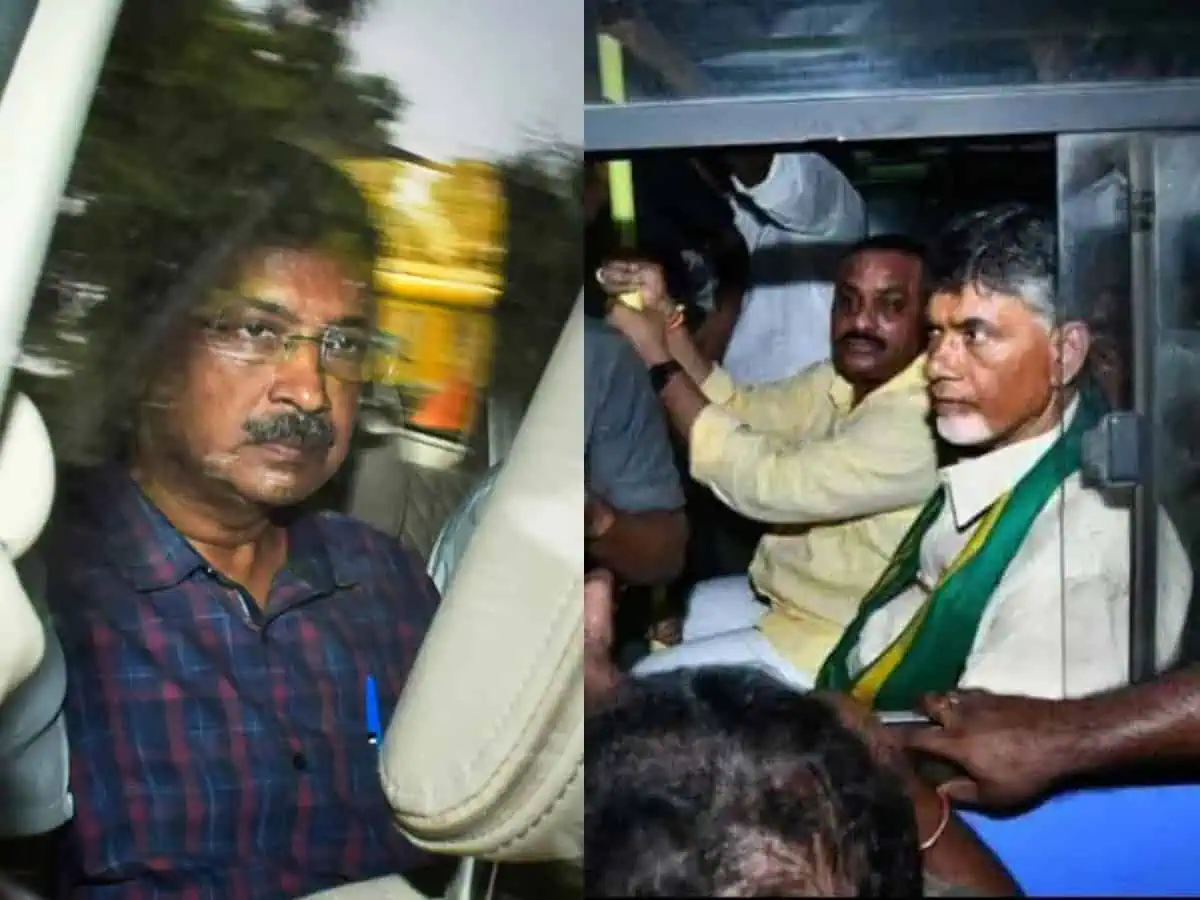
In Indian politics, the arrest of a high-profile leader is often perceived as a double-edged sword. While some view it as a martyrdom or an attempt to suppress political leadership, others see it as a symbol of corruption or incompetence. A well-known political adage suggests that a mainstream Chief Ministerial candidate who faces arrest is likely to have an elevated chance of returning to power in the subsequent election. This theory has been validated in the past with figures like Y.S. Jagan Mohan Reddy and Revanth Reddy, both of whom used their arrests as a tool for political mobilization.
Case Study 1: Chandrababu Naidu – From Arrest to Resounding Victory
One of the most compelling recent examples of this phenomenon is the arrest of N. Chandrababu Naidu, the leader of the Telugu Desam Party (TDP) in Andhra Pradesh. In 2023, Naidu was arrested in a highly controversial and widely criticized case involving an alleged skill development scam, engineered by the ruling Y.S. Jagan Mohan Reddy government. The arrest took place roughly six months before the state assembly elections, with the apparent aim of damaging Naidu’s political credibility and morale of his party workers.
However, the move backfired in a spectacular fashion. Rather than weakening Naidu’s position, the arrest galvanized his supporters and sympathizers. The public narrative painted Naidu as a victim of political vendetta, and his detention turned into a rallying cry for his loyalists. In the 2024 Andhra Pradesh elections, Naidu led the National Democratic Alliance (NDA) to a remarkable victory, with a 93% strike rate. The electorate overwhelmingly rejected the allegations against him, instead choosing to reaffirm their support for his leadership.
The political consequences for the Jagan Reddy government were far-reaching. Not only did Naidu return with a resounding mandate, but Jagan himself faced significant backlash. In the aftermath of the elections, Jagan Reddy found himself without the opposition leader status, a dramatic fall from grace given the pre-arrest context.
Case Study 2: Arvind Kejriwal – Sympathy Fails to Translate into Electoral Success
In contrast, the arrest and subsequent release of Arvind Kejriwal, the Chief Minister of Delhi and Aam Aadmi Party (AAP) leader, in the Delhi liquor scam case provides a sharp contrast to the outcome seen with Naidu. Kejriwal’s arrest, occurring under similar political timing – just months before the 2024 Delhi Assembly elections – was expected to boost his party’s prospects. AAP hoped that the arrest would generate public sympathy and rally voters behind Kejriwal, painting him as a victim of political targeting by the Bharatiya Janata Party (BJP)-led Central Government.
However, the results from the 2024 Delhi Assembly elections were strikingly different. While AAP did not lose the election by a substantial margin, Kejriwal’s personal defeat in the New Delhi constituency came as a major shock. The arrest failed to resonate with the electorate in the way AAP had hoped. Instead of propelling Kejriwal back into power, the scandal surrounding the Delhi liquor policy appeared to have a damaging effect on his political career. The public sentiment turned against Kejriwal, and the sympathy factor that he hoped for seemed to evaporate.
In this case, the narrative surrounding Kejriwal’s arrest and his political leadership did not generate the desired electoral dividends. Voters seemed to perceive the charges against him and the political maneuvering surrounding his arrest as a sign of incompetence or corruption, rather than a fight against political persecution. Kejriwal’s loss of his own constituency, despite his high profile and the campaign centered around his victimhood, highlighted the limits of this kind of political strategy.
Conclusion: A Case Study in the Diverging Impact of Arrests on Political Careers
The contrasting electoral outcomes of Chandrababu Naidu and Arvind Kejriwal following their arrests underscore the complex relationship between political arrests, public sentiment, and electoral success. While Naidu’s arrest served to strengthen his public image and solidify his political base, Kejriwal’s experience serves as a cautionary tale that an arrest does not always translate into an electoral advantage.
The key difference lies in the broader public perception and the narrative that takes shape in the aftermath of such arrests. Naidu’s arrest was widely viewed as politically motivated, which played into the sentiments of his supporters. In contrast, Kejriwal’s arrest, while initially seen as a potential rallying point, failed to resonate in the same way. Instead of evoking sympathy, it seems to have exacerbated concerns over governance and integrity, leading to a significant electoral setback for the AAP.
As Indian politics continues to evolve, the arrest of high-profile politicians remains a powerful tool—both for those in power seeking to eliminate threats, and for opposition leaders attempting to rally public support. However, as these case studies show, the impact of such arrests is far from uniform, and their success or failure depends largely on the public’s interpretation of the political motives behind them.
Recent Random Post:
GHMC Officials Seized Tamil Nadu EX CM Jayalalithaa House | Hyderabad
GHMC Officials Seized Tamil Nadu EX CM Jayalalithaa House | Hyderabad