








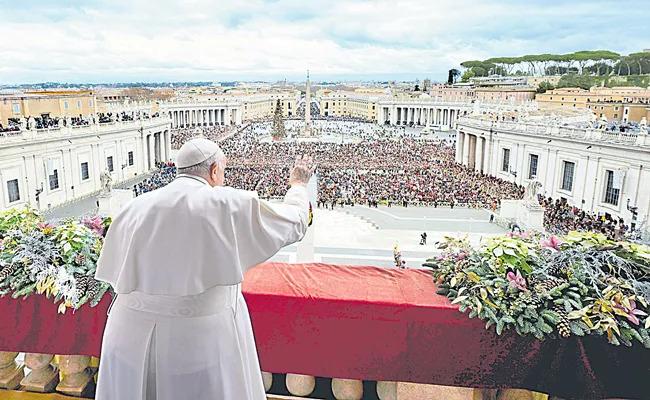
Pope Francis, who passed away on April 22 at the age of 88, was widely regarded as one of the most progressive and transformative leaders in the history of the Catholic Church. His papacy, which began in 2013, was marked by a profound shift in tone, rooted in compassion, inclusion, and a commitment to social justice. While he did not alter core Church doctrine, his approach emphasized pastoral care, global empathy, and an unwavering focus on the needs of the marginalized.
One of Pope Francis’ most notable contributions was his inclusive stance on LGBTQ+ rights. Famously saying, “Who am I to judge?” when asked about gay priests, he underscored his belief in the dignity of all individuals, regardless of sexual orientation. In 2023, he made headlines by approving blessings for same-sex couples, while maintaining the Church’s traditional definition of marriage. Throughout his papacy, he consistently emphasized that LGBTQ+ individuals are “children of God,” deserving of respect and pastoral care.
Pope Francis also made environmental advocacy a cornerstone of his papacy, most notably through his landmark encyclical, Laudato Si’, which called for urgent global action to address climate change and environmental degradation. He regarded ecological destruction as a “sin against creation” and pushed for global cooperation to protect the planet for future generations. His stance on the environment reflected a broader commitment to justice, acknowledging the disproportionate impact of ecological damage on the world’s poor and vulnerable populations.
On the issue of war and militarization, Pope Francis was an unflinching advocate for peace, diplomacy, and disarmament. His calls for ceasefires in conflicts like Gaza and Ukraine highlighted his enduring belief in the power of dialogue over violence. A vocal critic of the arms trade and nuclear weapons, he consistently urged global leaders to prioritize diplomacy and peace-building.
Gender equality also featured prominently in Pope Francis’ papacy. He denounced the gender pay gap as “deeply unjust,” advocating for equal pay for equal work and emphasizing the need to practice gender equality, not just preach it. His support for the empowerment of women within the Church was evident, though he remained cautious in advocating for women’s ordination.
Perhaps one of the most defining aspects of Pope Francis’ leadership was his commitment to addressing the sexual abuse crisis within the Church. He called the abuse of children one of the gravest crimes imaginable and worked tirelessly to hold accountable those who perpetrated or enabled such crimes. In 2019, he took the unprecedented step of abolishing the Pontifical Secret, dismantling the institutional silence that had shielded abusers and offering a pathway toward transparency and accountability.
Pope Francis was also a pioneer in fostering interfaith dialogue. He sought to build bridges with Jewish, Muslim, and other religious communities, marking historic milestones such as his visit to the Arabian Peninsula and his signing of a joint declaration on human fraternity with a Grand Imam. He condemned religious extremism, warning that terrorism is a dangerous ideology that can infiltrate any faith.
Economically, Pope Francis was a staunch critic of unbridled capitalism and growing global inequality. He consistently called for a more equitable economic system, one that prioritized human dignity over profit. His advocacy for the poor, migrants, and marginalized communities resonated globally, and he frequently spoke out against the injustices faced by those living in poverty or forced to flee their homes due to conflict and persecution.
Pope Francis’ legacy is one of compassion, inclusion, and a deep commitment to justice. His papacy was defined by a pastoral, people-first approach that not only reshaped the Catholic Church’s relationship with the world but also left an indelible mark on global social and moral discourse. He will be remembered as a pope who worked tirelessly to make the Church a more inclusive, compassionate, and socially responsible institution.
Recent Random Post: