









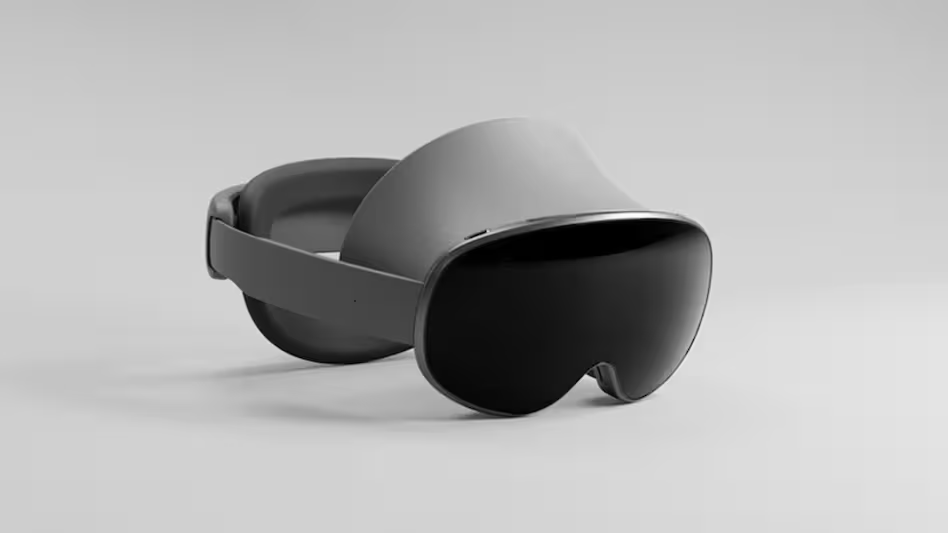
Samsung is reportedly in the final stages of developing its first Android-powered smart glasses, codenamed “Haean,” with a potential launch later this year. According to South Korean news outlet ETNews, the device is designed as a lightweight, wearable alternative to bulkier mixed reality (MR) headsets, such as Apple’s Vision Pro. The anticipated release may coincide with the debut of Samsung’s long-awaited XR headset, Project Moohan.
Expansion of Samsung’s XR Ecosystem
While Samsung, Google, and Qualcomm have been collaboratively developing Project Moohan—also referred to as “Galaxy XR”—for several years, recent reports suggest that Samsung has been working on at least two additional XR devices: Haean and another project, codenamed “Jinju.” Whereas Moohan is expected to be a high-end, head-mounted device optimized for indoor use, Haean will reportedly be a lightweight pair of smart glasses designed for outdoor usability. Meanwhile, details regarding Jinju’s form factor remain undisclosed.
Expected Features and Specifications
The Haean smart glasses are expected to feature a built-in display that overlays information directly onto the lenses, integrated speakers for audio feedback, and advanced gesture-based interaction. Samsung is reportedly focusing on a design that offers adaptability to different face shapes, removing the need for external controllers or physical buttons. Instead, the glasses will incorporate built-in cameras and sensors for movement tracking and gesture-based controls, aligning with similar functionalities in Apple’s Vision Pro and Samsung’s Project Moohan headset.
Leaked specifications indicate that Haean may be powered by Qualcomm’s Snapdragon AR1 chip, coupled with a secondary processor from NXP. The device is also rumored to feature a 12MP camera, potentially utilizing Sony’s IMX681 CMOS sensor, supporting vision-based functionalities such as QR code scanning, facial recognition, and hand-gesture controls. The battery capacity is speculated to be 155mAh, and the device’s weight is expected to be approximately 150 grams, making it one of the lightest in its category.
AI Integration and Software Advancements
One of Haean’s key differentiating factors is its integration of artificial intelligence. Samsung is expected to leverage Google’s Gemini assistant, offering AI-powered functionalities similar to the Meta RayBan smart glasses. While earlier reports suggested Samsung’s first-generation smart glasses might not include a display, the latest leaks indicate a strategic shift toward incorporating display technology, possibly influenced by Google’s advancements in Android XR glasses.
Launch Timeline and Market Implications
Samsung has officially confirmed that Project Moohan is slated for a 2025 release, and sources suggest that Haean could be unveiled alongside it. ETNews reports that Samsung aims for a full launch within the year, with an initial production batch of 500,000 units. Industry insiders anticipate that the announcement may take place at Samsung’s upcoming Unpacked event in July.
With Google also developing Gemini-powered smart glasses, the competition in the Android-powered XR wearables space is intensifying. Samsung’s entry into the smart glasses market represents a major step toward broader adoption of XR technology. Pricing details remain undisclosed, but given that Project Moohan is expected to retail around $2,500 in the U.S., Haean will likely be positioned as a more affordable alternative, making it accessible to a wider audience.
Conclusion
As Samsung expands its XR ecosystem, the introduction of the Haean smart glasses signals a significant shift in the wearable technology market. With AI-powered features, gesture-based controls, and a lightweight design, Haean has the potential to provide a more accessible and versatile alternative to high-end MR headsets. As the industry moves toward mainstream adoption of XR technology, Samsung’s innovation in the space could redefine the future of wearable computing.
Recent Random Post: