









Beginning October 12, all Schengen countries will launch the long-awaited Entry/Exit System (EES), a major digital upgrade to border management. The new system will replace traditional passport stamping with biometric verification, allowing travellers to clear border control through automated scans of their passport, face, and fingerprints.
The EES, first announced in 2022, aims to make travel faster, safer, and more transparent. It will electronically record the time, place, and duration of each visit to the Schengen Area, helping authorities monitor the 90-day limit for short-term stays and identify overstayers or fraudulent identities. Data collected will remain valid for three years, streamlining travel for frequent visitors.
For travellers from non-EU countries—including the UK and India—this means faster, contactless processing at airports, seaports, and land borders. Once registered, subsequent entries into any Schengen country will require only a quick biometric scan, significantly reducing wait times.
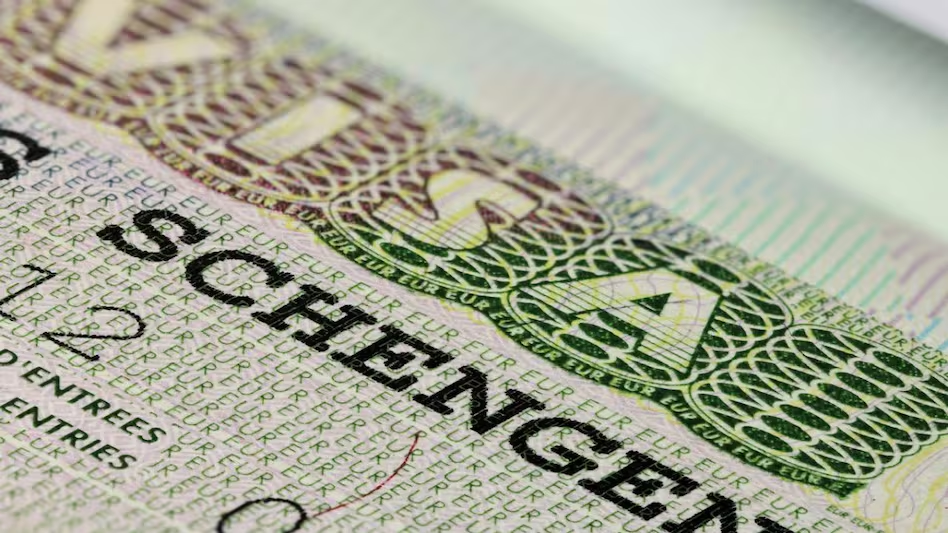
In tandem with EES, Schengen visas are also going digital. From October 12, new visas will feature a secure barcode instead of the traditional sticker, simplifying verification and reducing the risk of document fraud. The transition to fully digital visas will be completed by April 2026, during which both sticker-based and barcode-based visas will coexist.
These initiatives, including the upcoming ETIAS travel authorisation system, reflect Europe’s broader move toward tech-driven border management. Travellers are advised to ensure complete and accurate visa applications, as errors or incomplete submissions could lead to rejection.
For Indian applicants, VFS Global has confirmed that only documents listed on the official checklist will be accepted for Schengen visa applications to Switzerland, helping ensure a smoother and more efficient process.
Recent Random Post: