









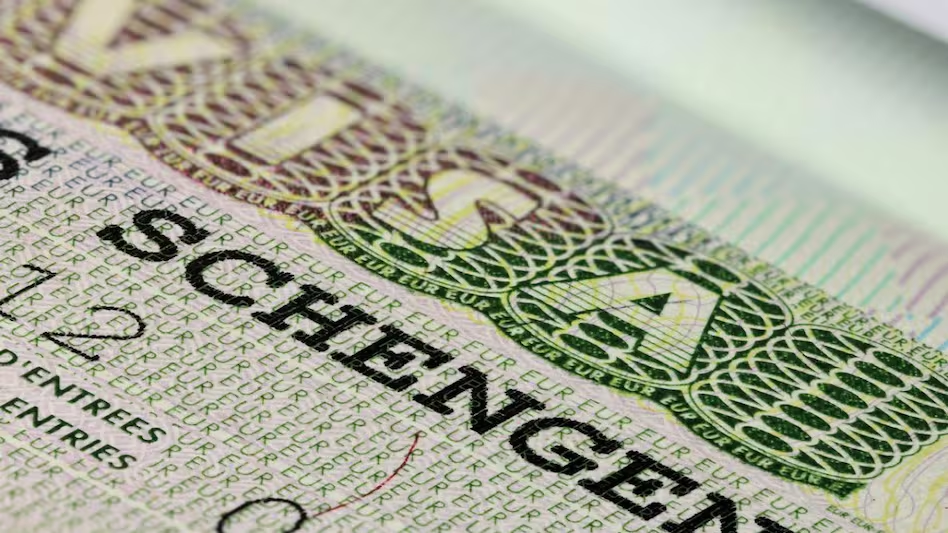
The Schengen region’s hallmark principle of open internal borders is undergoing its most significant test in 2025, as a growing number of member states reintroduce internal border checks in response to escalating concerns over migration, terrorism, and regional instability.
Germany, France, the Netherlands, Austria, Italy, Slovenia, Denmark, Sweden, Norway, and Bulgaria have all implemented varying degrees of internal controls this year, marking a notable shift in the European Union’s approach to the free movement of people.
These measures, while allowed under Articles 25 and 29 of the Schengen Borders Code, represent an unprecedented application of the provision, reflecting the evolving security and humanitarian landscape in Europe.
Germany reinstated checks across all its land borders in September 2024, citing irregular migration and organized smuggling activities. These controls, initially temporary, have since been extended through at least September 2025. France followed suit on November 1, 2024, reintroducing checks amid elevated terrorism threats and in preparation for high-profile events, with expectations that the measures will remain beyond the current April 30, 2025, deadline.
The Netherlands began a six-month internal control period on December 9, 2024, aimed at managing increased migration pressures. Austria and Italy continue to maintain vigilant border monitoring, citing sustained inflows of migrants and asylum seekers. Slovenia has upheld controls since December 2024, attributing its decision to regional geopolitical instability.
In Northern Europe, Denmark, Sweden, and Norway have extended their internal checks through the end of 2025, each referencing heightened national security concerns. Bulgaria, which partially acceded to the Schengen area in January 2025, is also selectively applying internal controls in light of recent regional dynamics.
For travelers, these developments mean the temporary return of document verification at borders where unrestricted travel had previously been the norm. Authorities advise all travelers—including tourists, students, and cross-border workers—to carry valid identification (passports or national ID cards), relevant visas, and supporting documents such as accommodation or employment proof. Delays at land, rail, and intra-Schengen air borders should be anticipated, particularly at peak times.
Logistics operators and transport companies are also adapting to longer processing times and increased inspection protocols at key crossings, with implications for supply chains and freight movement across the continent.
Despite the tightening of border procedures, EU officials emphasize that the Schengen framework remains operational, with its foundational goals of integration and mobility preserved. Travelers are encouraged to consult the European Commission’s Temporary Border Controls Tracker and national immigration authorities for the latest updates prior to any cross-border travel.
These developments underscore the delicate balance between maintaining internal security and upholding the core freedoms that define the Schengen Area.
Recent Random Post: