









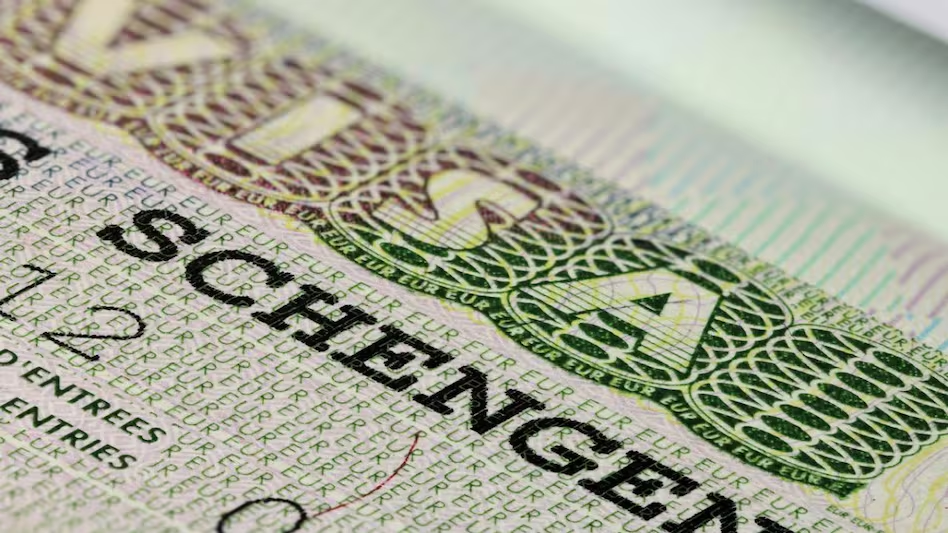
From 2026, Schengen visa applications will move to a largely digital system, marking one of the most significant changes to the process in years. Travellers will submit applications online through a centralised platform, which is expected to speed up processing timelines, though most applicants will still need to visit VFS Global centres for biometric enrolment. Applicants must submit their visa requests at least 15 days before travel, with the option to apply up to six months in advance. Authorities recommend applying earlier, especially during peak travel seasons, due to sustained demand.
Despite the digital shift, core eligibility requirements remain unchanged. Applicants must hold a passport issued within the last 10 years and valid for at least three months beyond their planned stay. Mandatory documents include a completed visa application form, travel insurance covering at least €30,000, proof of financial means, accommodation details, confirmed or reserved return tickets, recent bank statements, and a cover letter explaining the purpose of travel. Biometric data, including fingerprints and a photograph, must also be submitted unless already provided within the past 59 months.
Applicants should submit their applications at the embassy or consulate of the Schengen country where they plan to spend the most time, or, if travel days are evenly split, at the country of first entry. The process begins with completing the online application and uploading supporting documents, followed by a visit to a visa application centre for biometric collection and submission of original papers. The standard visa fee is €90 (approximately Rs 9,600) for adults and €45 (approximately Rs 4,800) for children aged 6 to 12. Applicants can track their visa status online, and processing generally takes at least 15 days, though this may vary depending on demand and individual profiles.
Schengen visas are issued under different categories depending on the purpose and duration of travel. Type A Airport Transit Visas apply to travellers passing through a Schengen airport without entering the country. Type C short-stay visas, the most common, allow stays of up to 90 days within a 180-day period for tourism, business, family visits, or short-term study. Type D long-stay visas are for stays exceeding 90 days, usually for work, education, or residence. In exceptional cases, authorities may issue a Limited Territorial Validity (LTV) visa, restricting travel to specific Schengen countries, typically for humanitarian reasons or when travel documents are not recognised by all member states.
Most non-EU citizens require a Schengen short-stay visa, though certain categories such as diplomats, military personnel, refugees, and organised student groups may be exempt. Some travellers may also need an airport transit visa, even if they do not leave the airport, depending on nationality. Authorities advise applicants to apply 30 to 45 days in advance to avoid delays. Inaccurate documentation, missing papers, or inconsistent travel plans remain the most common reasons for rejection. Applicants must demonstrate sufficient financial means, typically around €120 per day for the duration of the stay, and provide evidence of intent to return to their home country after travel.
The 2026 digital shift aims to streamline Schengen visa applications while maintaining thorough verification measures, ensuring a faster and more efficient process for travellers across Europe.
Recent Random Post: