








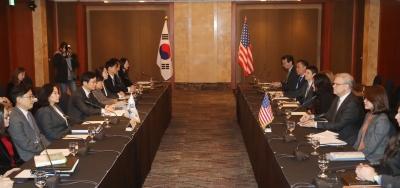
Seoul, February 14 (IANS) – South Korea’s acting president, Choi Sang-mok, addressed concerns over the potential impact of U.S. President Donald Trump’s newly introduced “reciprocal” tariffs, emphasizing that while the effect on South Korea’s economy may not be significant, vigilant monitoring is essential.
On Thursday (U.S. time), President Trump signed a presidential memorandum outlining plans to impose country-specific tariffs on the U.S.’s major trading partners. This move raised concerns in South Korea, especially given its significant trade surplus with the U.S., which reached $55.7 billion last year.
Choi noted that South Korea’s current free trade agreement (FTA) with the U.S. may cushion the impact of these tariffs. Under the FTA, the average tariff rate on imports from the U.S. stands at just 0.79 percent as of 2024. The tariff rate is expected to further decrease in alignment with the bilateral agreement’s annual tariff reduction plan. Additionally, the tariff on manufactured goods imported from the U.S. has already been set at zero percent.
Despite these provisions, Choi stressed the importance of close monitoring of the evolving trade situation. The U.S. is not only likely to assess tariffs but also other non-tariff barriers, including value-added taxes and digital service taxes. In response, Choi has instructed relevant ministries to form a task force to thoroughly evaluate South Korea’s vulnerabilities and potential barriers, preparing to present the country’s position to U.S. officials.
Meanwhile, the South Korean economy faces “increasing downward pressure” as uncertainties both domestically and globally persist, negatively affecting economic sentiment. According to the Ministry of Economy and Finance’s monthly report, the Green Book, the country continues to experience economic strain amid slowed domestic demand recovery and employment challenges. Geopolitical risks and an escalating global trade war, intensified by U.S. tariff measures, have contributed to this mounting pressure.
The finance ministry’s report highlights the third consecutive month of downward economic pressure, which has been further exacerbated by domestic political uncertainties, including a brief declaration of martial law by President Yoon Suk Yeol in December.
In conclusion, while South Korea’s trade surplus and the favorable tariff conditions under the FTA with the U.S. provide some buffer against the potential fallout from new tariffs, the South Korean government remains proactive in assessing the broader impact of both tariff and non-tariff barriers on its economy.
Recent Random Post: