









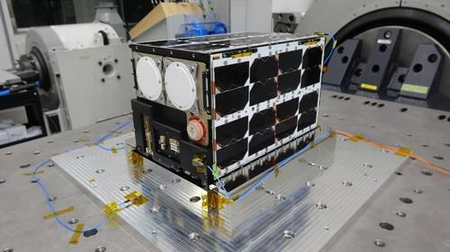
Seoul, May 2 (IANS) — South Korea’s space agency announced that a domestically developed small satellite will participate in NASA’s Artemis II mission, the first crewed lunar mission since 1972. The 19-kilogram satellite, named K-RadCube, is designed to measure space radiation and study its effects on astronauts as the mission passes through the Van Allen radiation belts.
This collaboration follows an agreement signed between the Korea AeroSpace Administration (KASA) and NASA in October 2024, aimed at joint research for sustainable lunar exploration and future Mars missions. The satellite, developed by the Korea Astronomy and Space Science Institute in partnership with Korean startup Nara Space Technology, is expected to be delivered to NASA by July 2025. It will be mounted on the Orion stage adapter of NASA’s Space Launch System (SLS) rocket.
Artemis II, scheduled for launch in April 2026, is part of NASA’s broader Artemis programme to return humans to the Moon and pave the way for deeper space missions.
In parallel, KASA and NASA’s jointly developed space telescope, SPHEREx, has officially begun science operations. Launched on March 11, the telescope will survey the entire sky, capturing around 3,600 images per day for the next two years.
South Korea is among 47 nations that have signed the Artemis Accords, reinforcing global cooperation in peaceful and transparent space exploration.
Recent Random Post: