









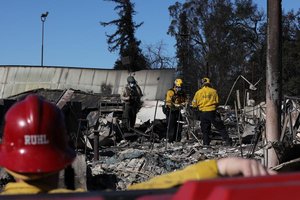
The wildfires that ravaged Southern California beginning on January 7 have left a lasting impact on the region’s educational infrastructure. At least 12 schools in Los Angeles County were severely damaged, with five campuses destroyed. Among the hardest-hit institutions were two elementary schools in Pacific Palisades, as well as Palisades Charter High School. In Pasadena and Altadena, three additional elementary schools were reduced to rubble. The financial repercussions of these losses are staggering, with the cost of rebuilding estimated in the hundreds of millions of dollars, and recovery expected to span several years.
In response to this unprecedented disaster, California’s Proposition 2, a 10-billion-dollar school construction bond passed in November, has provided a potential lifeline for affected districts. However, the fund is distributed on a first-come, first-served basis, and many schools are already waiting for assistance. As a result, some districts fear that the available funds will be exhausted quickly, potentially leaving smaller districts with significant needs underserved.
To aid in the rebuilding process, the California Legislature has approved a 2.5-billion-dollar fire relief package specifically for the Los Angeles area. However, the recovery will require multiple funding streams, including insurance settlements, private grants, local bonds, and both state and federal funds. While these funds will help, the task ahead remains daunting, as districts scramble to find temporary solutions and continue to support displaced students and staff. In Los Angeles Unified School District, students from the destroyed schools have already been relocated, and efforts are being made to address the mental health needs of students and staff affected by the trauma of displacement.
The destruction is not only physical but emotional, with thousands of students and staff losing their homes. In the Pasadena Unified School District alone, over 1,300 staff members were impacted by the fire, while an undetermined number of families also suffered. The trauma extends beyond the loss of buildings, as the ongoing emotional toll on affected individuals complicates the recovery process.
The rebuilding effort is further complicated by the need to address future fire risks. Climate change has exacerbated the severity of wildfires in the region, raising questions about how to rebuild schools to be more resilient in the face of such disasters. Experts suggest that rebuilding without considering these future risks could result in the same issues down the road.
Historical recovery efforts in California suggest that the path to full recovery will be long and challenging. In Sonoma County, for instance, the Anova Center for Education, destroyed by the 2017 Tubbs Fire, only reopened in January—more than seven years after the disaster. Similarly, the Paradise Unified School District, devastated by the 2018 Camp Fire, has already spent 155 million dollars on rebuilding but still faces a shortfall of 150 million dollars to complete repairs.
As Southern California looks to rebuild, the long-term impacts of these fires will continue to resonate, with education officials facing the enormous task of reconstructing not only schools but the lives of students and staff affected by this ongoing crisis.
Recent Random Post: