









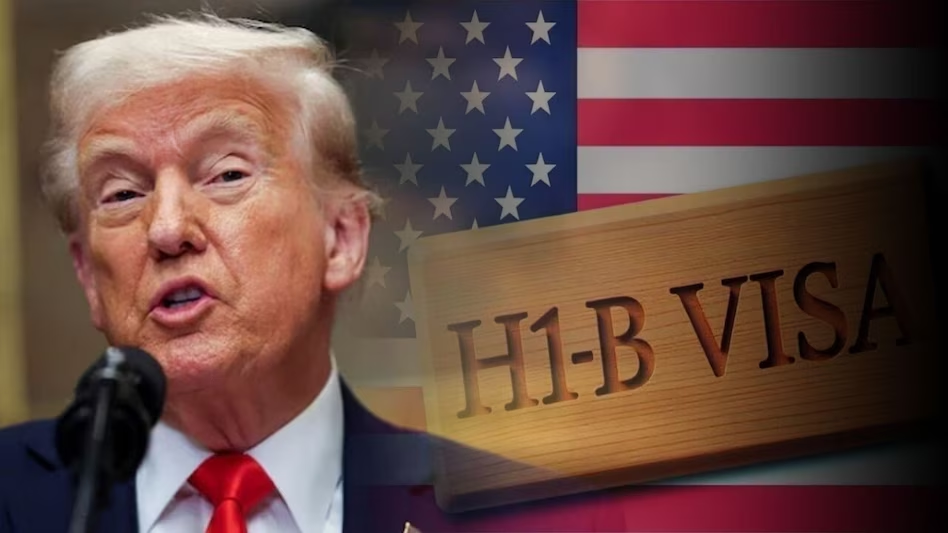
California, along with nineteen other U.S. states, has filed a federal lawsuit in Boston to challenge the Trump administration’s new rule imposing a $100,000 fee on new H-1B visas for highly skilled foreign workers. This marks the third legal challenge to the fee since it was announced in September.
The plaintiffs argue that the sharp increase from the current $2,000–$5,000 fee violates federal law and could have severe consequences across multiple sectors. The states contend that the fee will place significant financial pressure on employers and institutions that rely on H-1B visa holders, particularly in technology, healthcare, and education.
California Attorney General Rob Bonta emphasized that the Trump administration does not have the authority to impose the fee. According to Bonta, the law only permits fees to cover the cost of administering visa programs. He added that the $100,000 fee could create unnecessary financial burdens, worsen labor shortages, and threaten service cuts in essential sectors.
The Trump administration’s order prevents new H-1B visa recipients from entering the U.S. unless their sponsoring employers pay the $100,000 fee. Officials clarified that the policy does not affect current H-1B visa holders or those who applied before September 21. The White House claims the fee is a lawful use of presidential powers designed to prevent abuse of the H-1B program.
Critics argue that the H-1B system sometimes allows American workers to be replaced by lower-paid foreign labor, while business groups maintain that the program is essential to address skill shortages in the country. A coalition including the U.S. Chamber of Commerce, unions, and employers has also filed lawsuits against the fee.
Court hearings are expected next week in Washington, D.C. The outcome of this legal challenge could have major implications for U.S. employers dependent on skilled foreign workers and for the future of the H-1B visa system.
Recent Random Post: