









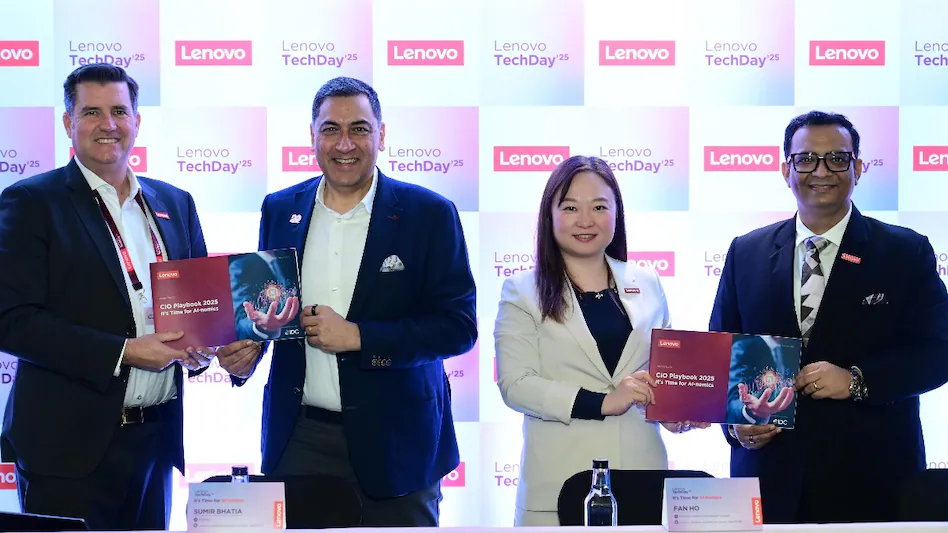
Indian organisations are poised for a significant leap in artificial intelligence (AI) investments, with generative AI (GenAI) expected to make up 43% of total AI spending by 2025. This insight comes from Lenovo’s latest CIO Playbook, titled “It’s Time for AI-nomics”, which outlines key findings from a global survey conducted by IDC. The study engaged over 2,900 respondents, including 900+ IT and business decision-makers across 12 Asia Pacific (APAC) markets.
AI Investment and Adoption Trajectory
The study forecasts that AI spending in India will grow by 2.7 times in the coming years. Despite this promising growth, AI adoption in India remains in the early stages. Nearly 49% of Indian organisations are either evaluating or planning AI initiatives within the next 12 months, aligning with the global average but falling short of the APAC regional average of 56%.
Key challenges highlighted in the report include achieving a satisfactory return on investment (ROI). Indian organisations are targeting a 3.6x ROI on their AI investments, prompting a cautious and strategic approach to deployment. Notable barriers to AI adoption include data quality issues, insufficient internal expertise, and high infrastructure costs.
Governance and Ethical Considerations
A significant priority for CIOs across the APAC region is governance, risk, and compliance (GRC), with the area rising by 12 spots in importance for 2025. However, only 19% of CIOs in India report fully implemented AI governance frameworks, underscoring the need for secure, responsible AI deployment. Ethical concerns, particularly around bias and fairness, remain the foremost risks tied to AI.
Key AI Applications and Infrastructure Preferences
Sales have emerged as the leading use case for AI in India, followed closely by marketing and software development. These findings are in line with broader regional trends, where IT operations, cybersecurity, and software development dominate AI applications.
Infrastructure preferences reveal a clear shift towards hybrid and on-premise solutions, with 63% of Indian organisations adopting these models. This preference is driven by the desire for greater control, security, and lower latency. Globally, 65% of organisations align with similar infrastructure strategies, emphasizing the growing importance of secure, scalable AI solutions.
AI-Powered PCs and Professional Services
AI-powered PCs are beginning to show substantial productivity gains, with 43% of APAC organisations reporting improvements. In India, more than half of surveyed organisations are actively planning to integrate AI-powered PCs, highlighting their potential in enhancing efficiency and collaboration.
The report also points to an increasing reliance on professional AI services. Nearly 29% of Indian CIOs are already leveraging these services, with an additional 54% planning to explore them. These services are designed to bridge skills gaps and support the seamless deployment of AI solutions.
A Vision for Scalable and Responsible AI
Lenovo’s efforts to promote responsible AI adoption are reflected in the findings of this report. As AI continues to reshape industries across the globe, the company emphasizes the importance of an outcome-led approach, focused on security, compliance, and innovation.
According to Amit Luthra, Managing Director of Lenovo ISG India, hybrid architectures offer a balanced solution that enables scalability and control, aligning perfectly with the specific demands of AI-driven innovation.
Conclusion
As Indian organisations chart their AI adoption paths, they are prioritizing strategic investments in generative AI, hybrid infrastructure, and professional AI services. The challenges of achieving ROI, managing governance, and addressing ethical concerns remain significant, but the clear shift towards secure, scalable, and responsible AI deployment marks a critical step towards the future of business and technology in India.
Recent Random Post: