








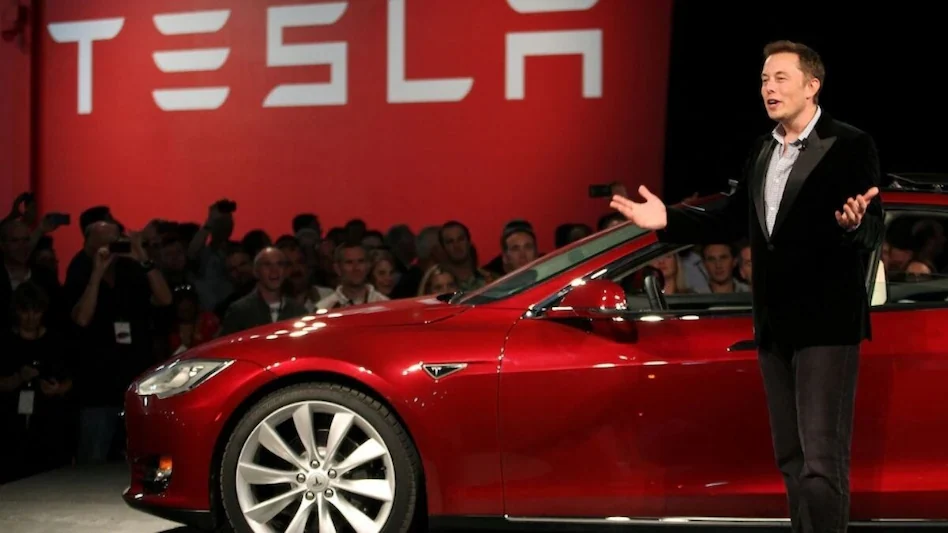
Tesla CEO Elon Musk has announced a landmark $16.5 billion agreement with Samsung Electronics for the production of Tesla’s next-generation AI6 chips, solidifying the South Korean tech giant’s role as a key semiconductor supplier in the electric vehicle maker’s AI ambitions.
The chips will be manufactured at Samsung’s upcoming foundry in Taylor, Texas, a facility that had been plagued by delays and uncertainty due to a lack of major clients. The strategic partnership is expected to revitalize the project and bolster Samsung’s standing in the fiercely competitive contract chip manufacturing market.
“Samsung’s giant new Texas fab will be dedicated to making Tesla’s next-generation AI6 chip. The strategic importance of this is hard to overstate,” Musk posted on social media platform X. He also revealed that Tesla would play an active role in optimizing production efficiency at the plant. “Samsung agreed to allow Tesla to assist in maximising manufacturing efficiency. This is a critical point, as I will walk the line personally to accelerate the pace of progress,” Musk added.
The announcement sent Samsung shares soaring more than 6% on Monday. While Samsung had previously confirmed a multibillion-dollar deal without disclosing the client due to confidentiality agreements, Reuters later confirmed Tesla’s involvement through sources familiar with the matter.
Samsung currently manufactures Tesla’s A14 chips, which power the company’s Full Self-Driving (FSD) systems. Production of the A15 generation is expected to commence by late 2026, positioning the AI6 as a more advanced future product in Tesla’s chip roadmap. Meanwhile, Tesla’s AI5 chips are being produced by Taiwan Semiconductor Manufacturing Company (TSMC) — initially in Taiwan and later in its Arizona facility.
This deal offers a critical boost to Samsung’s struggling foundry division, which reportedly suffered operating losses exceeding 5 trillion won (approximately $3.6 billion USD) in the first half of 2025. With major customers like Apple, Nvidia, and Qualcomm increasingly turning to TSMC — which controls 67% of the global foundry market, compared to Samsung’s 8% — this agreement provides Samsung with a much-needed anchor client and a renewed competitive edge.
The announcement comes ahead of Samsung’s quarterly earnings release and amid ongoing U.S.–South Korea trade negotiations aimed at deepening bilateral cooperation in strategic sectors such as semiconductors and shipbuilding.
Recent Random Post: