









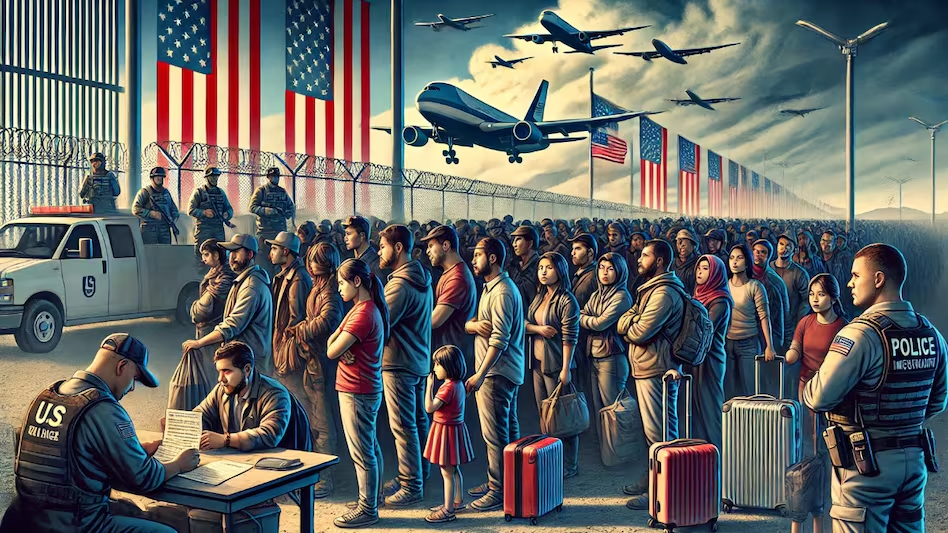
The Trump administration has intensified its stringent immigration policies, announcing the termination of legal protections for approximately 530,000 immigrants from Cuba, Haiti, Nicaragua, and Venezuela. This decision, disclosed by the Department of Homeland Security (DHS) on Friday, rescinds a humanitarian parole program established under former President Joe Biden.
The program, initiated in October 2022, allowed migrants from these four countries to enter the United States by air with financial sponsorships and granted them two-year permits to live and work legally. However, the Trump administration has denounced the initiative as an overreach of executive authority, with DHS alleging widespread misuse of the parole provision, traditionally reserved for temporary humanitarian relief.
According to DHS, affected individuals must leave the U.S. before their parole expiration date. Those who fail to comply may face deportation proceedings, though it remains unclear how many of the 530,000 migrants have secured alternative legal statuses since their arrival. Mass deportations could commence as early as April 24, 2025, or 30 days after the decision is formalized in the Federal Register.
Impact on Indian Immigrants in the U.S.
While this policy primarily affects Latin American and Caribbean migrants, it is part of a broader immigration crackdown that has implications for Indian immigrants as well. As of 2024, an estimated 4.8 million Indian immigrants reside in the United States, according to the Pew Research Center. Of this population, approximately 300,000 individuals are undocumented, often due to visa overstays or unlawful entries.
The Trump administration’s escalated deportation efforts have raised concerns within the Indian diaspora. Since January 2025, 388 Indian nationals have been deported, with 333 repatriated on three special flights in February. An additional 55 individuals were deported via Panama and returned to India on commercial flights, as per data presented by the Indian government to its Parliament.
Legal Challenge in the Suri Deportation Case
In a high-profile case, a federal judge has temporarily blocked the Trump administration from deporting Badar Khan Suri, an Indian postdoctoral researcher at Georgetown University. Suri was detained by U.S. immigration authorities on March 17, 2025, following accusations by DHS of “spreading Hamas propaganda” and alleged ties to a suspected terrorist.
His visa was revoked, and he faced imminent deportation. However, on March 20, 2025, a federal judge intervened, issuing an order to halt his removal pending further legal proceedings. Suri’s legal counsel contends that the allegations against him are unsubstantiated and politically motivated, emphasizing his academic credentials and research contributions.
The case is expected to set a significant legal precedent in the realm of immigration enforcement and due process protections for non-citizens in the United States. As the Trump administration continues its aggressive stance on immigration, legal battles and advocacy efforts are likely to shape the evolving landscape of U.S. immigration policy.
Recent Random Post: