





Trump Calls for Intel CEO Lip-Bu Tan’s Resignation Over Alleged China Ties: A High-Stakes Flashpoint in US Tech Policy
Washington, D.C. — August 2025
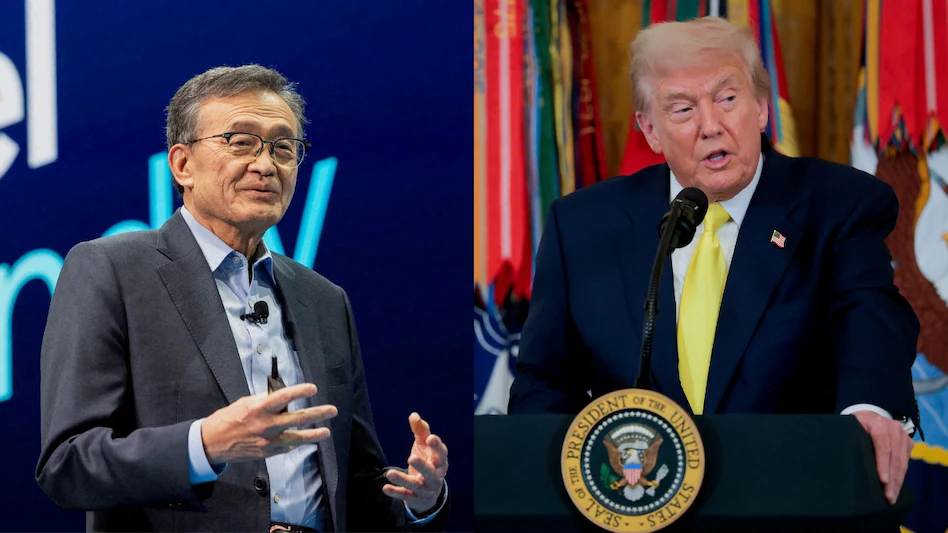
Former U.S. President Donald Trump has publicly demanded the resignation of Intel CEO Lip-Bu Tan, alleging conflicts of interest due to Tan’s historic business ties with Chinese tech firms. The move has catapulted Intel into the middle of a broader political and national security debate, touching on everything from U.S.-China relations to the future of domestic semiconductor production.
Key Issues Driving Trump’s Demand
1. Alleged Investments Linked to China’s Military
Lip-Bu Tan, who took over as Intel CEO in March 2025, spent over 40 years at venture capital firm Walden International. During his tenure, Walden was involved in investments in several Chinese technology companies—some of which have been linked to military contractors.
More scrutiny has come from Republican Senator Tom Cotton, who cited Tan’s former leadership at Cadence Design Systems. Under Tan, Cadence sold software to China’s National University of Defense Technology, a military-affiliated institution. Cadence recently pleaded guilty to violating U.S. export controls related to these sales.
2. CHIPS Act Funding and Political Optics
Intel has been a key beneficiary of the CHIPS and Science Act, receiving billions of dollars in federal subsidies to ramp up domestic semiconductor manufacturing, particularly in Arizona. Critics argue that a CEO with financial entanglements in China undermines the very purpose of this taxpayer-backed initiative—reducing U.S. dependence on foreign supply chains.
Trump has leveraged this narrative to reinforce his “America First” policy platform, which emphasizes domestic manufacturing and economic self-reliance.
3. Unresolved Divestments
While Intel has stated that Tan has divested from certain Chinese-linked holdings, public financial disclosures still list some investments as active. This lack of clarity has left the door open to political attacks, with opponents questioning whether Tan’s financial ties have been fully severed.
4. Trump’s Track Record of Corporate Pressure
The demand is consistent with Trump’s history of pressuring corporate leaders on issues tied to national security and economic policy. In a Truth Social post on Thursday, Trump wrote:
“The CEO of INTEL is highly CONFLICTED and must resign, immediately. There is no other solution to this problem.”
5. Intel’s Response
Intel and Lip-Bu Tan have categorically denied any conflict of interest. The company issued a statement affirming its commitment to U.S. national security and highlighting its six-decade legacy of domestic manufacturing. It also pointed to its multi-billion-dollar investments in next-generation fabrication plants, particularly in Arizona, as evidence of its alignment with U.S. policy goals.
Industry and Investor Reactions: A Divided Front
Reactions from industry analysts and investors reflect a split between concern over national security optics and confidence in Tan’s strategic value.
Anshel Sag, principal analyst at Moor Insights & Strategy, argued:
“I believe that POTUS shouldn’t be calling for any CEO to be stepping down, especially not one who just took the job this year. Lip-Bu’s deep knowledge of Chinese semiconductor infrastructure makes him uniquely valuable to the U.S.”
David Wagner, equity chief at Aptus Capital Advisors, added:
“This is more about optics and momentum. Trump’s making a serious push to bring business back to U.S. soil—after the Apple deal, this is his next big target.”
Ryuta Makino, research analyst at Gabelli Funds, speculated:
“This might have more to do with internal Intel dynamics—possibly even a ploy tied to TSMC and contingency plans around Intel’s 14A node. It feels very political.”
Blake Anderson of Carson Group offered a more cautionary view:
“This adds uncertainty. It shows that external political forces may still heavily influence Intel’s long-term strategic direction.”
Shiraz Ahmed, CEO at Sartorial Wealth, remarked:
“It’s not surprising. Trump’s history of publicly challenging corporate leadership continues, and it’s unlikely to stop with Intel.”
Phil Blancato, CEO at Ladenburg Thalmann Asset Management, warned against setting a precedent:
“Presidents shouldn’t dictate who runs private companies. The board needs to weigh Trump’s influence against governance principles. But clearly, Intel faces challenges that go beyond just the CEO.”
A Broader Battle: Tech, Geopolitics, and National Strategy
The controversy extends far beyond Tan’s tenure or even Intel as a company. It reflects the intensifying geopolitical rivalry between the U.S. and China over technology leadership—particularly in semiconductors, a sector deemed critical to national security. It also encapsulates the political theater around the CHIPS Act and the U.S.’s efforts to reclaim manufacturing dominance.
As Intel’s board weighs its next steps, the issue remains unresolved. Whether Tan can weather the storm may depend on further disclosures about his financial holdings—and the political calculus surrounding one of America’s most strategically important companies.
Recent Random Post: