








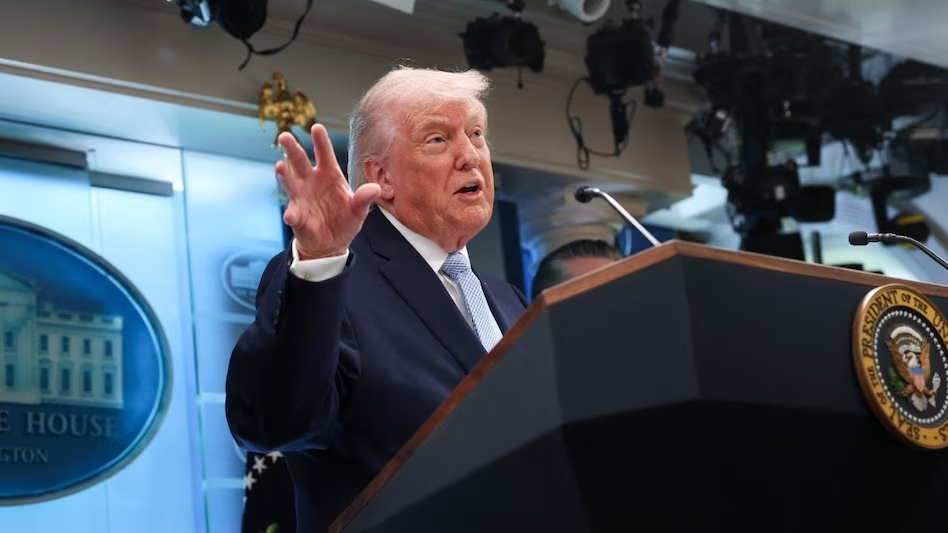
Following the collapse of peace talks, Donald Trump and his advisers are reportedly weighing a mix of military and strategic options against Iran, including limited airstrikes and a naval blockade of the Strait of Hormuz.
According to reports, the proposed measures aim to break the current diplomatic deadlock. While a full-scale war remains unlikely due to fears of regional destabilization, targeted strikes on key infrastructure—such as power and water facilities—are being considered. At the same time, a temporary naval blockade is seen as a way to exert economic pressure on Iran without immediately escalating into a prolonged conflict.
After the failed negotiations, Trump held discussions with advisers while also signaling openness to diplomacy. However, he maintained a firm stance, warning of possible military action if Iran does not comply with U.S. demands.
The White House has indicated that multiple options remain on the table, while cautioning against premature conclusions about the administration’s next move. On the other side, Iranian officials have suggested that while talks in Islamabad did not yield immediate results, they may have laid the groundwork for future negotiations—provided there is mutual trust.
The United States has set strict conditions for any renewed talks. These include reopening the Strait of Hormuz without restrictions, halting uranium enrichment, dismantling nuclear facilities, and ending support for regional proxy groups. Iran, however, has refused to abandon its nuclear ambitions, making a breakthrough difficult.
The Strait of Hormuz remains central to the crisis, as a significant portion of global oil supply passes through it. Any blockade could severely impact Iran’s economy, which heavily depends on oil exports, but it also carries serious risks. Tehran could retaliate with missile or drone attacks on naval forces, potentially triggering a wider conflict.
Adding to the complexity, Trump faces pressure both domestically and internationally. Allies are concerned about disruptions to global oil markets, and economic experts warn that instability in the region could push the world toward a broader financial downturn.
As tensions rise, the situation remains highly volatile, with both military escalation and diplomatic resolution still possible paths forward.
Recent Random Post: