









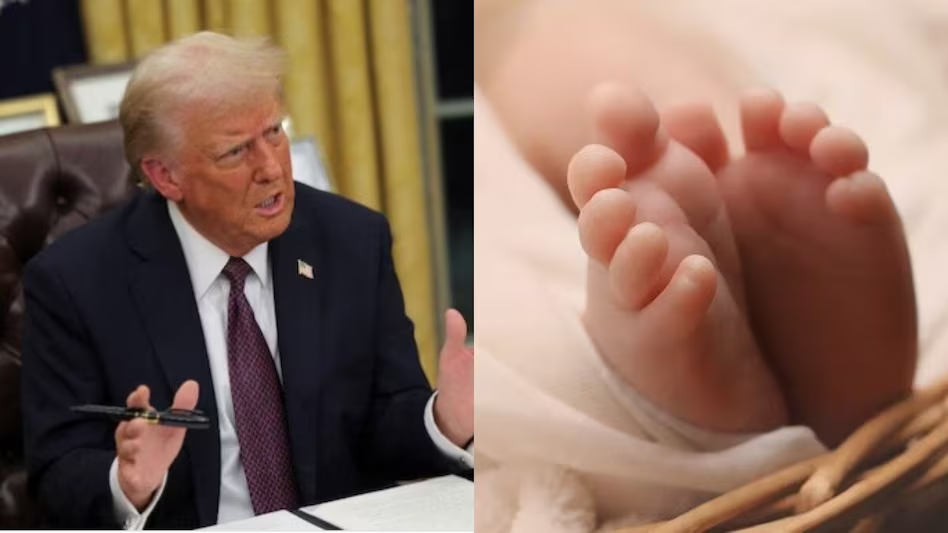
On his first day back in office, President Donald Trump signed Executive Order 14156: Protecting the Meaning and Value of American Citizenship, reigniting a constitutional showdown over birthright citizenship. The order targets children born to undocumented immigrants and temporary visitors, challenging over 125 years of legal precedent and igniting immediate pushback from federal courts, with one judge calling the order “blatantly unconstitutional.”
What is Birthright Citizenship?
Birthright citizenship, or jus soli, automatically grants U.S. citizenship to anyone born on American soil. This principle has been a cornerstone of U.S. law for over a century, ensuring that any child born within the country’s borders is recognized as a citizen, regardless of the immigration status of their parents.
The 14th Amendment and its Historical Context
The 14th Amendment, adopted in 1868, enshrined birthright citizenship in the U.S. Constitution, aiming to guarantee civil rights for newly freed African Americans post-Civil War. The amendment states:
“All persons born or naturalized in the United States, and subject to the jurisdiction thereof, are citizens of the United States.”
In United States v. Wong Kim Ark (1898), the U.S. Supreme Court reaffirmed this principle, ruling that a child born on U.S. soil to Chinese immigrant parents was a U.S. citizen, despite the parents’ ineligibility for citizenship under the Chinese Exclusion Acts.
The Contents of Trump’s Executive Order
While the executive order acknowledges that the 14th Amendment was instrumental in repudiating Dred Scott v. Sandford (1857), it asserts that the amendment has always excluded certain groups from automatic citizenship. The order claims that children born to undocumented parents or temporary visitors are not subject to U.S. jurisdiction and therefore should not be granted citizenship.
Recent Random Post: