









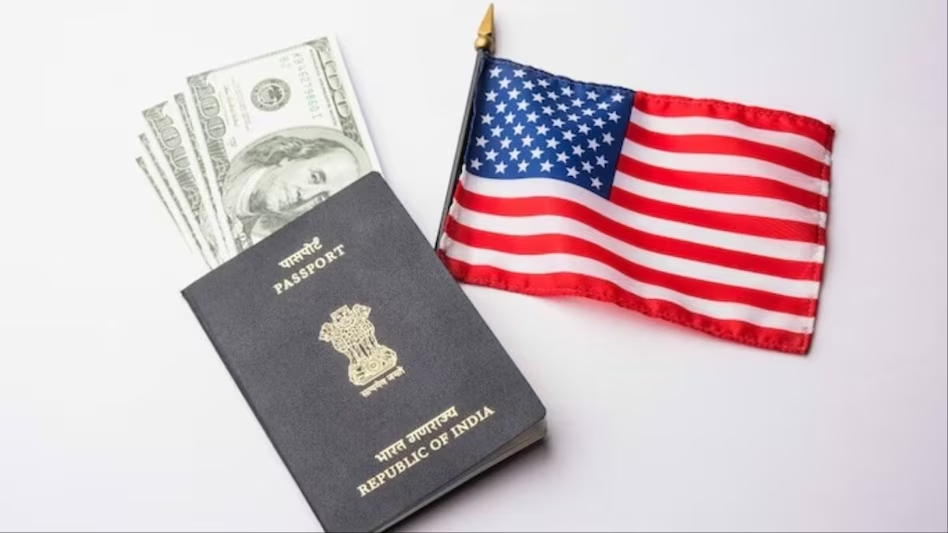
The Trump administration has intensified its efforts to challenge hiring practices that allegedly prioritize foreign workers over American candidates. Central to this initiative is the H-1B visa program, which has faced scrutiny for potentially displacing U.S. workers and undermining job opportunities for American citizens. The administration’s stance aligns with broader efforts to reform employment practices and curb potential violations of federal employment laws.
EEOC’s Stand Against Hiring Discrimination
On February 19, 2025, the Equal Employment Opportunity Commission (EEOC) issued a stern warning to businesses against engaging in unlawful hiring preferences favoring foreign workers. Acting Chair Andrea Lucas underscored the widespread nature of national origin discrimination in hiring across multiple industries.
“Unlawful bias against American workers, in violation of Title VII, is a large-scale problem in multiple industries nationwide,” Lucas stated. She further highlighted concerns over certain employer policies that prefer illegal aliens, migrant workers, visa holders, and other legal immigrants over American workers—practices that the EEOC has pledged to combat aggressively. The commission’s commitment to enforcing anti-discrimination laws aims to shift employer incentives, reducing reliance on unauthorized labor while ensuring fair employment opportunities for American job seekers.
Reasons Behind Employer Preference for Foreign Workers
The EEOC outlined several factors contributing to businesses’ preference for hiring foreign workers:
Cost Advantages: Employers may seek foreign labor to capitalize on wage loopholes or illegal payment schemes that reduce overall labor costs.
Exploitation Risks: Some companies believe that foreign workers are less likely to assert their labor rights due to limited legal knowledge.
Customer Preferences: Certain businesses cite client demands or cultural expectations as reasons for hiring foreign workers.
Perceived Work Ethic: Employers may hold biases that foreign workers exhibit stronger dedication and productivity compared to domestic candidates.
Debate Over the H-1B Visa Program
Despite the concerns raised by the EEOC, proponents of the H-1B program argue that it does not negatively impact American workers. The American Immigration Council has presented research indicating that H-1B visa holders earn significantly higher wages than the national average. In 2021, the median salary for an H-1B worker was $108,000, compared to the median U.S. worker salary of $45,760. Such findings challenge the notion that the H-1B program suppresses wages or displaces American employees.
Legal and Industry Implications
The issue has gained further traction with a lawsuit against Meta Platforms, alleging systematic hiring preferences for visa holders to lower labor costs. A federal judge’s recent decision allowing the case to proceed has amplified scrutiny on the tech sector’s employment practices. Historically, both the Trump and Biden administrations have introduced measures to tighten H-1B regulations, including increased employer scrutiny and revised wage requirements. Despite these regulatory shifts, the demand for H-1B visas continues to exceed available quotas, underscoring the ongoing reliance on foreign talent.
Impact on Indian Workers
Indian professionals represent the largest group benefiting from the H-1B visa program, receiving 72.3% of all visas issued between October 2022 and September 2023, according to U.S. Citizenship and Immigration Services (USCIS). Any policy changes restricting visa sponsorships could significantly impact employment opportunities for Indian professionals in the United States, affecting industries such as technology, healthcare, and finance.
Conclusion
As the U.S. government intensifies its crackdown on hiring discrimination, businesses face heightened legal and regulatory scrutiny. The EEOC’s enforcement actions, coupled with ongoing legal battles and proposed policy changes, will play a pivotal role in shaping the future of employment practices in the country. While the debate over the H-1B program and foreign worker hiring continues, companies must ensure compliance with federal employment laws while balancing workforce needs and diversity considerations.
Recent Random Post: